

E-commerce
Contextual E-commerce Scale Guides
A reusable e-commerce prompt for showing honest product scale through familiar nearby objects in clean retail contexts.
Featured real result
What this prompt produced
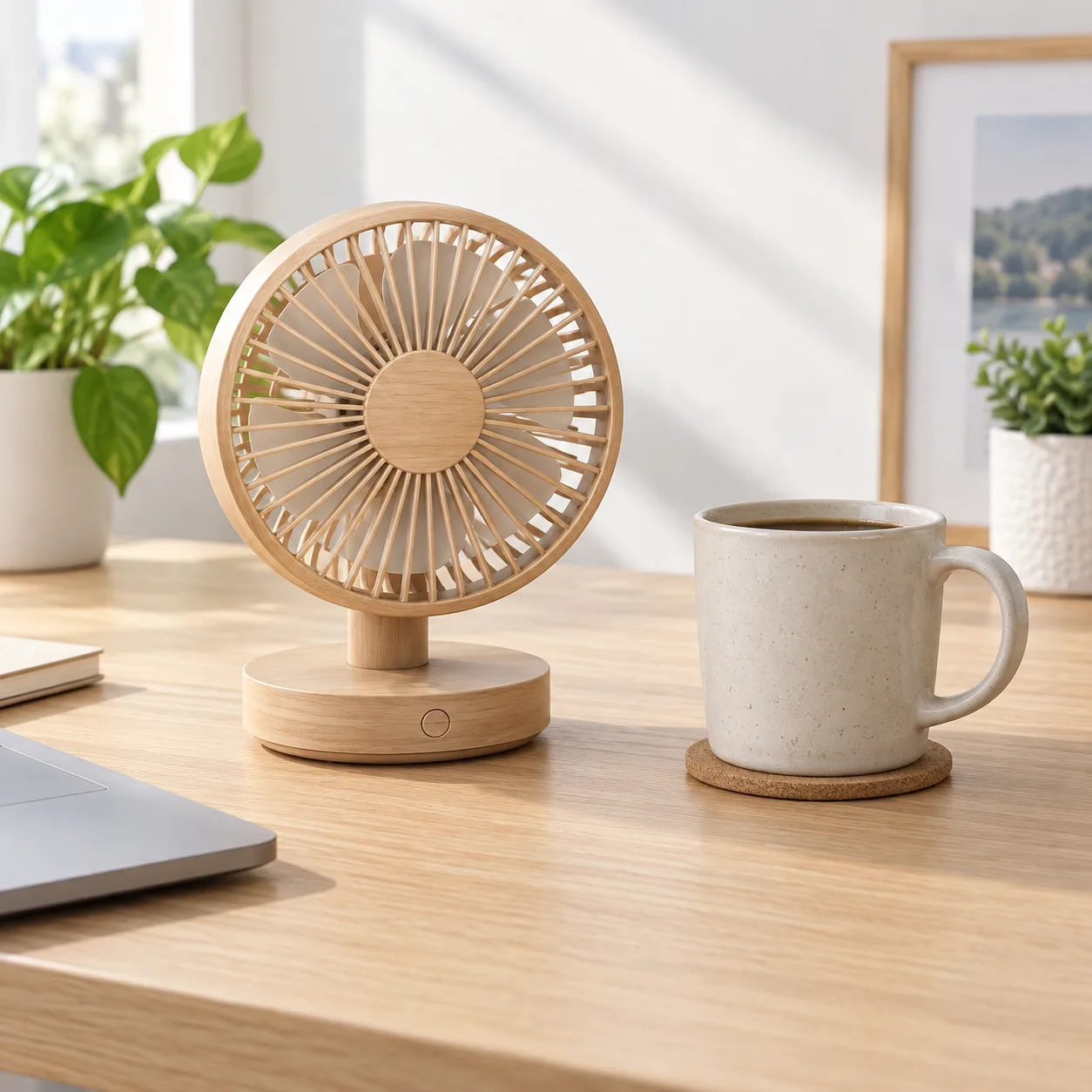
The mug gives the compact fan an immediately understandable desk-scale context without competing with the product.
The master prompt
Create a square 1:1 conversion-ready product photograph of [PRODUCT] beside [SCALE_REFERENCE] on [SURFACE] in [SETTING], using [COMPOSITION], [LIGHTING], and [PALETTE]. Show honest physical scale without labels or text, with clear geometry and clean catalog realism. No logos, watermark, people, hands, duplicate products, or clutter.
Visual direction
Style: Clean contextual catalog photography designed for practical product-scale communication.
Lighting: Soft retail-friendly light preserves edges, surface finish, and separation from the reference.
Composition: The product remains dominant while one familiar reference object stays close enough to communicate scale.
Variables
- PRODUCT — product being sold
- SCALE_REFERENCE — familiar size reference
- SURFACE — display surface
- SETTING — retail context
- COMPOSITION — arrangement
- LIGHTING — product illumination
- PALETTE — retail colors
How to use it
- Select one product and one genuinely familiar scale reference.
- Keep the reference unbranded and subordinate to the listing subject.
- Check geometry and relative size before publishing.
Same master prompt, different variables
Demo variations
Demo 01
a compact desk fan
- SCALE_REFERENCE
- a coffee mug
- SURFACE
- light oak
- SETTING
- bright home office
- COMPOSITION
- front catalog arrangement
- LIGHTING
- soft daylight
- PALETTE
- white, oak, indigo
The mug gives the compact fan an immediately understandable desk-scale context without competing with the product.
Demo 02
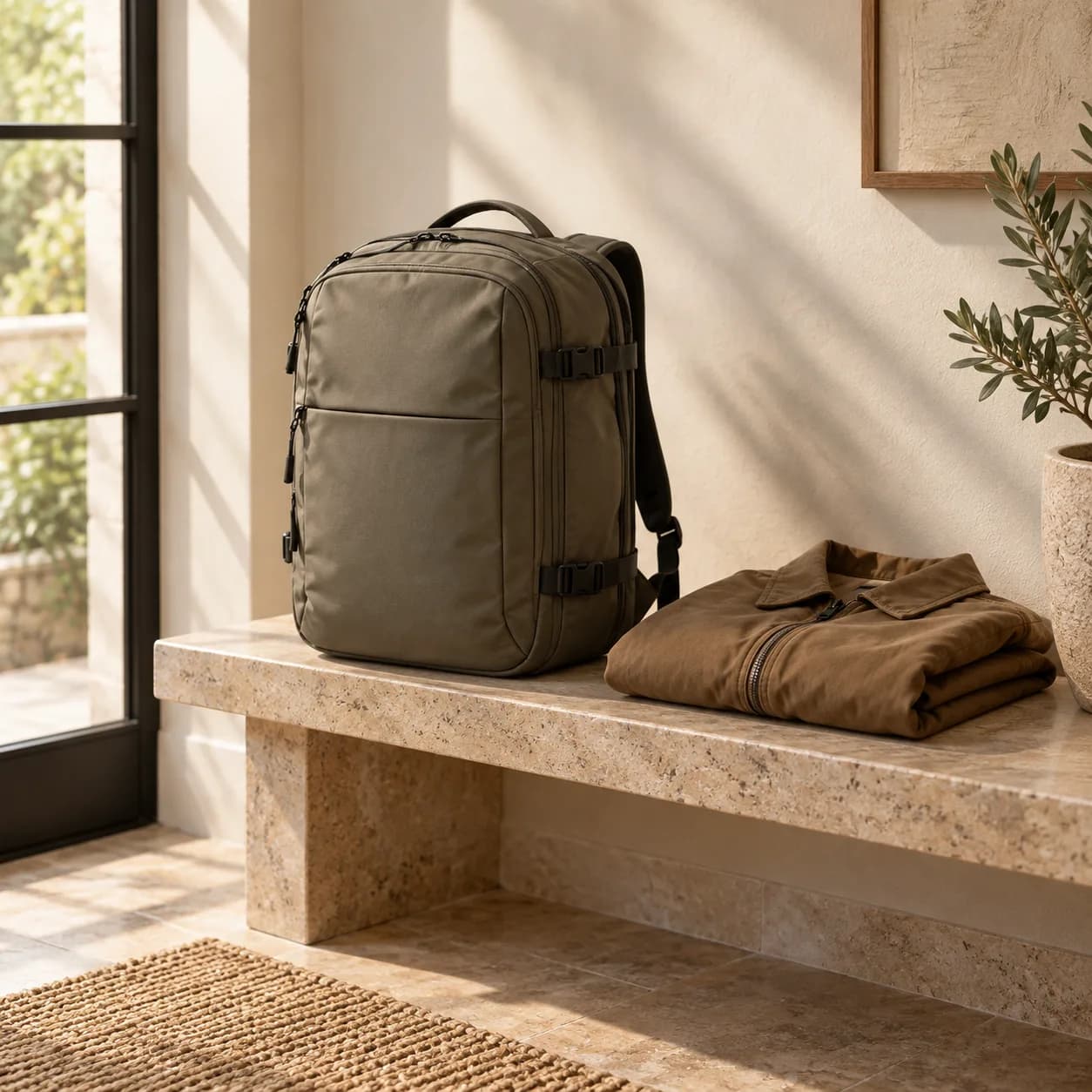
a travel backpack
- SCALE_REFERENCE
- a folded jacket
- SURFACE
- warm stone
- SETTING
- entryway bench
- COMPOSITION
- three-quarter scale arrangement
- LIGHTING
- large diffused window light
- PALETTE
- olive, sand, graphite
The folded jacket supports the backpack's travel context while retaining a clear product silhouette.
Demo 03
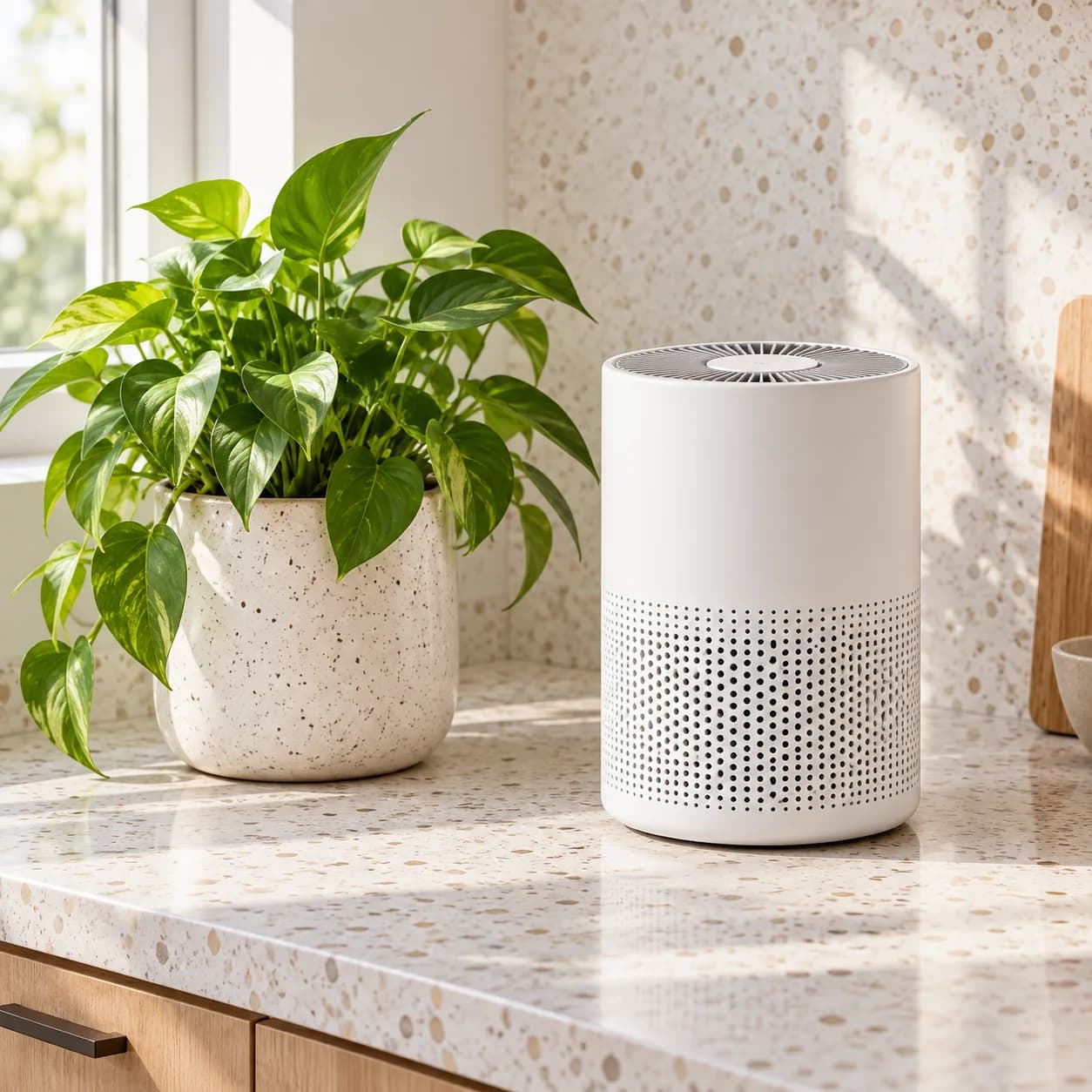
a countertop air purifier
- SCALE_REFERENCE
- a houseplant pot
- SURFACE
- pale terrazzo
- SETTING
- quiet kitchen corner
- COMPOSITION
- side-by-side product view
- LIGHTING
- clean morning light
- PALETTE
- white, sage, pale blue
The plant pot establishes countertop scale and the purifier stays visually primary.

Demo 04
a small reading lamp
- SCALE_REFERENCE
- a paperback book with blank cover
- SURFACE
- walnut shelf
- SETTING
- calm reading nook
- COMPOSITION
- front three-quarter catalog frame
- LIGHTING
- gentle lamp and window mix
- PALETTE
- cream, walnut, indigo
The blank book provides a familiar size cue beside the small lamp without introducing readable packaging text.
Consistency / testing notes
Product dominanceCONSISTENT
Each image keeps the listed product as the clearest and largest commercial subject.
Scale communicationMOSTLY CONSISTENT
The familiar objects provide useful context, although relative proportions are illustrative rather than measured.
Catalog cleanlinessCONSISTENT
Quiet surfaces and unbranded objects keep the results suitable for listing exploration.
All four demos use final master prompt version v1-contextual-scale-guide; only declared variable values changed. Four authentic generations were assessed as one set.
Tips for better results
- Use references people encounter in the same room as the product.
- Avoid reference objects with printed text or logos.
- Use a real measurement graphic later if precision is required.
Limitations
- AI may not preserve exact physical measurements.
- Reference objects can shift in size across outputs.
- Final listings should include verified specifications separately.