

Fashion
Fashion Material Study Editorials
A reusable fashion prompt for editorial images where textile construction and handwork become the visual subject.
Featured real result
What this prompt produced
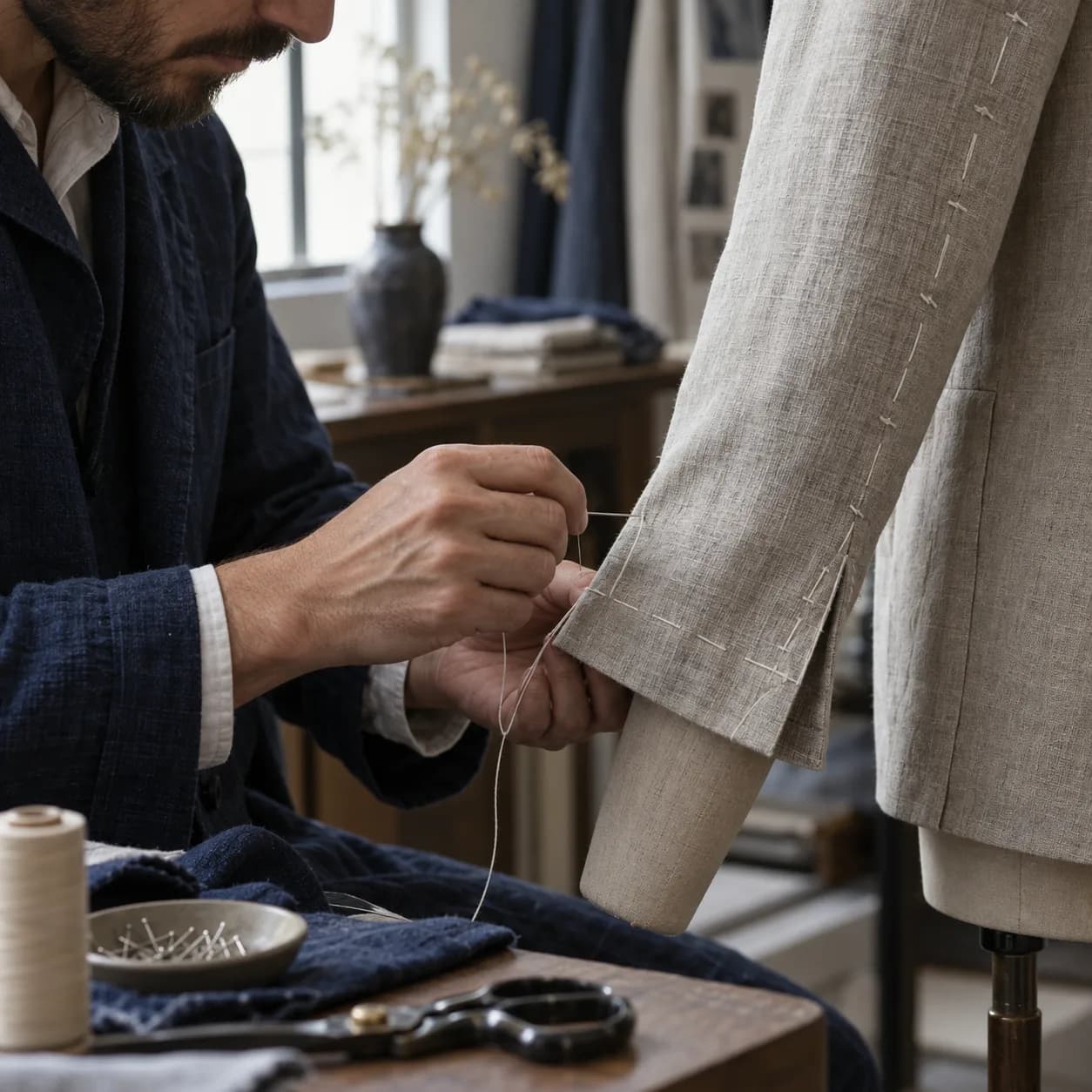
The linen sleeve and basting action dominate the atelier frame and make the textile process immediately readable.
The master prompt
Create a square 1:1 editorial fashion photograph of [SUBJECT] presenting [MATERIAL] in [SETTING], with [COMPOSITION], [LIGHTING], and [PALETTE]. Make the material and construction the story, with natural anatomy and magazine polish. No readable text, logos, watermark, or recognizable brands.
Visual direction
Style: Material-led editorial fashion photography with tactile craft detail and natural human presence.
Lighting: Soft directional light separates fibers, leather, knit, and straw without theatrical effects.
Composition: Close process framing keeps the textile or construction detail larger than the surrounding workspace.
Variables
- SUBJECT — maker or fashion subject
- MATERIAL — textile or construction focus
- SETTING — workshop environment
- COMPOSITION — framing
- LIGHTING — light quality
- PALETTE — coordinated colors
How to use it
- Choose one maker, material, and workshop story for each test.
- Keep the subject focused on a visible construction action.
- Review hands, textile detail, and brand-like marks before publication.
Same master prompt, different variables
Demo variations
Demo 01
a close-up tailor
- MATERIAL
- hand-basting a linen sleeve
- SETTING
- quiet atelier
- COMPOSITION
- hands and garment detail
- LIGHTING
- soft north light
- PALETTE
- oat, ink, indigo
The linen sleeve and basting action dominate the atelier frame and make the textile process immediately readable.
Demo 02
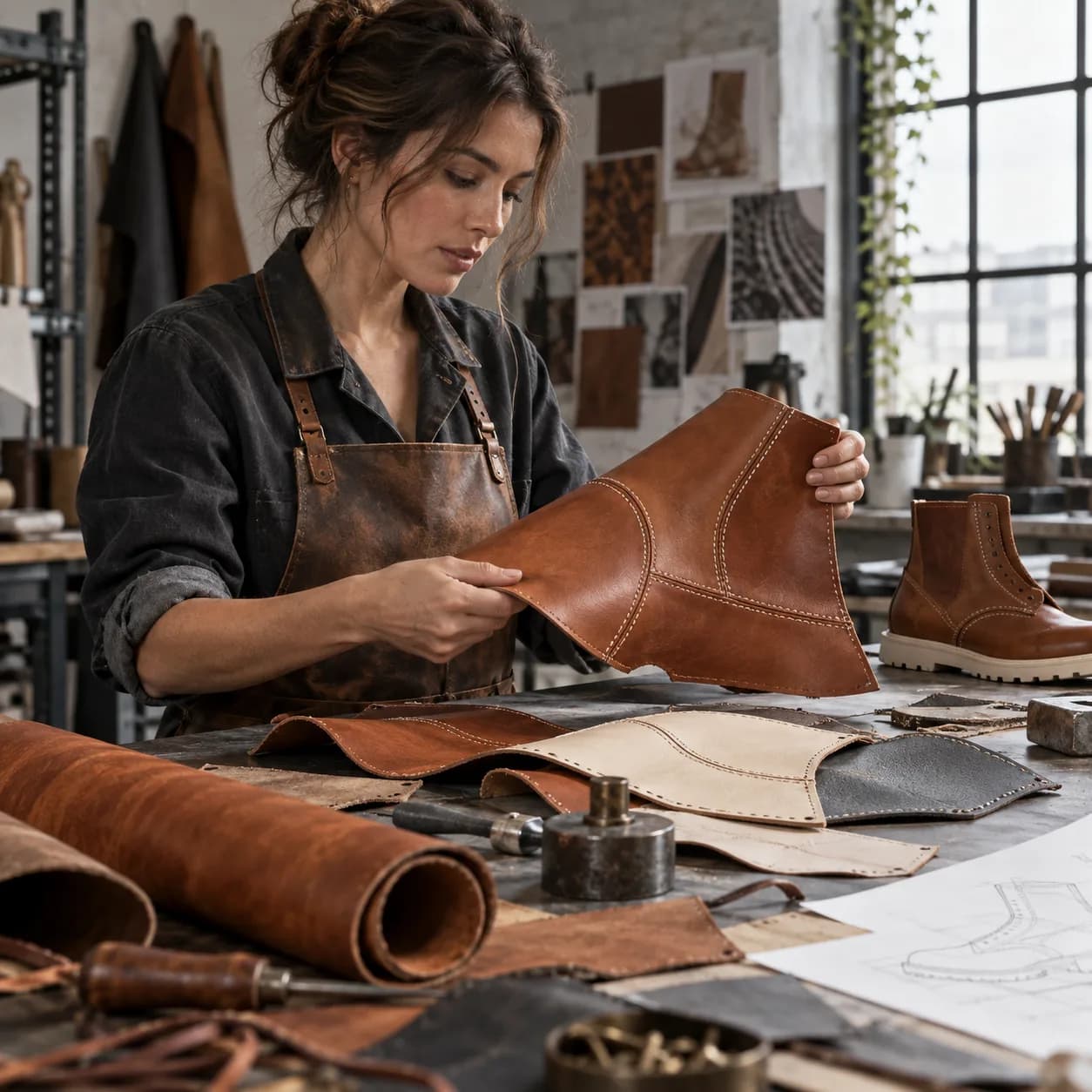
a footwear designer
- MATERIAL
- testing stitched vegetable-tanned leather panels
- SETTING
- industrial worktable
- COMPOSITION
- three-quarter craft scene
- LIGHTING
- directional window light
- PALETTE
- cognac, cream, slate
Leather panels and the worktable form a practical three-quarter study with visible stitched edges.
Demo 03
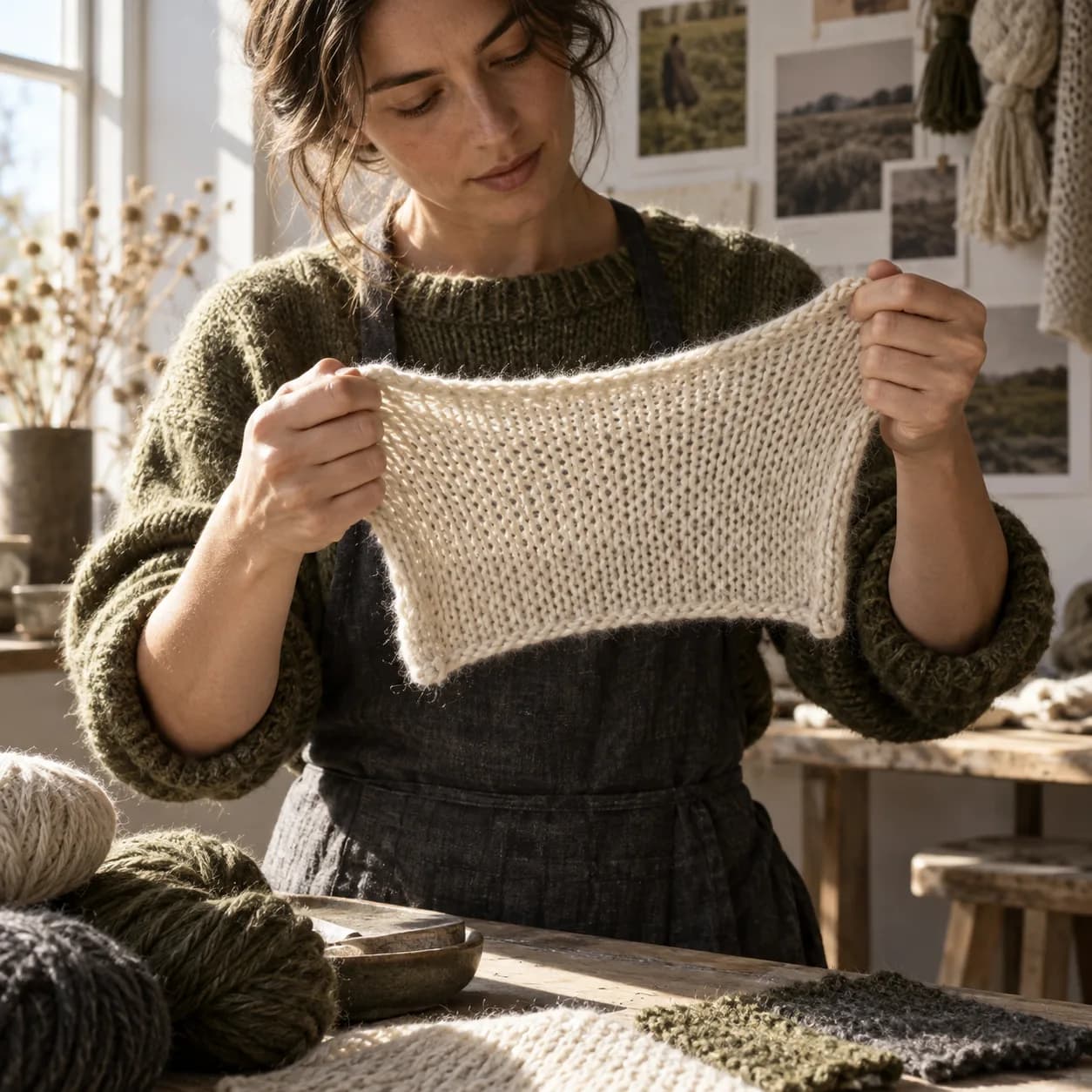
a knitwear maker
- MATERIAL
- stretching a hand-knit alpaca swatch
- SETTING
- sunlit studio
- COMPOSITION
- mid-torso process portrait
- LIGHTING
- warm side light
- PALETTE
- ecru, moss, charcoal
The alpaca swatch creates a soft foreground texture while the maker remains secondary.
Demo 04
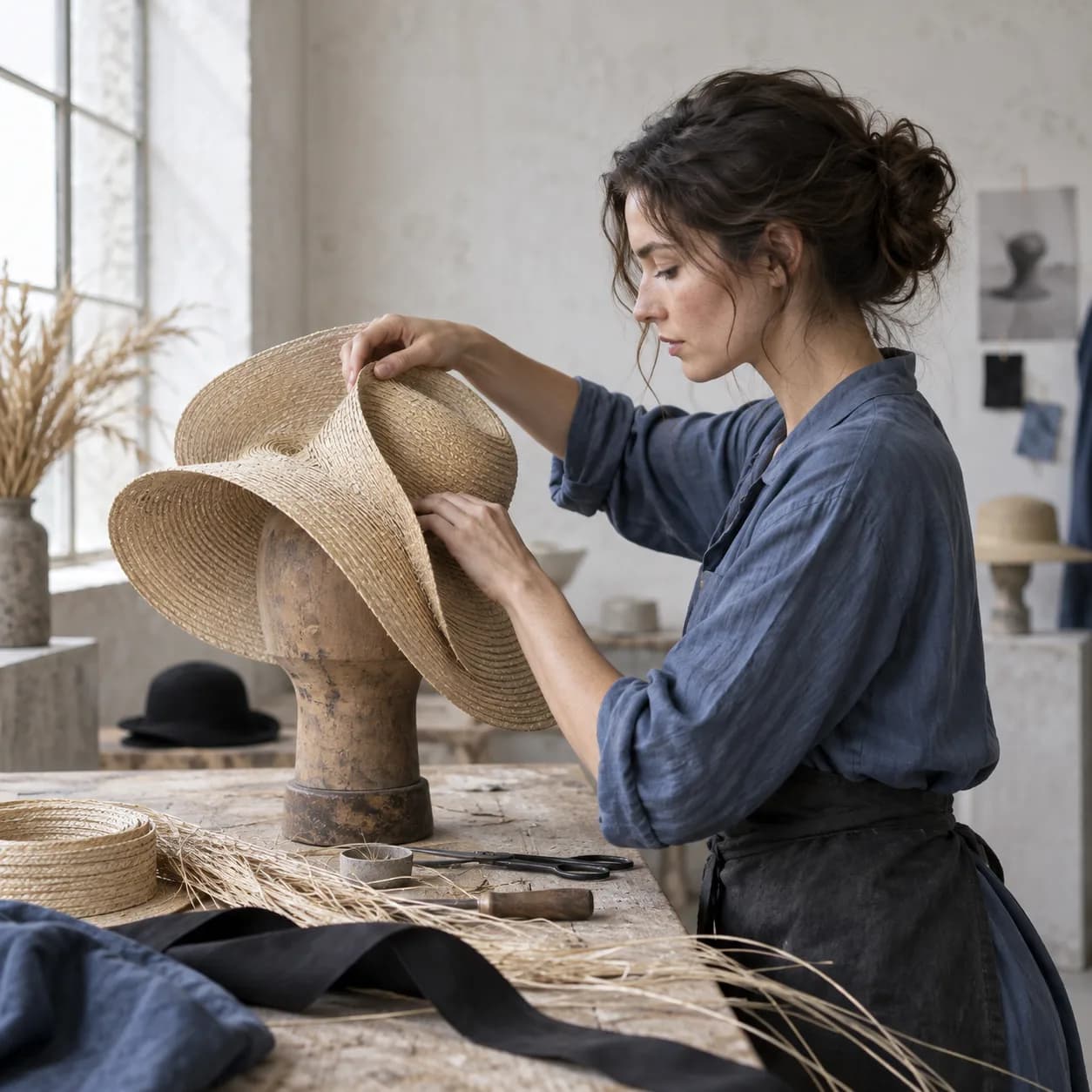
a milliner
- MATERIAL
- shaping a sculptural straw hat
- SETTING
- plain plaster workshop
- COMPOSITION
- profile craft composition
- LIGHTING
- high diffuse daylight
- PALETTE
- straw, black, muted blue
The straw hat holds a strong profile silhouette against the plain plaster setting.
Consistency / testing notes
Material-led hierarchyCONSISTENT
All four outputs make a textile or construction detail the primary visual story.
Craft contextCONSISTENT
Each workspace supports the fashion process without overpowering the subject.
Hands and fine detailMOSTLY CONSISTENT
The gestures are useful overall, with expected variation in fingers and small stitch marks.
All four demos use final master prompt version v1-fashion-material-study; only declared variable values changed. Four authentic generations were assessed as one set.
Tips for better results
- Use one dominant material rather than a crowded garment inventory.
- Quiet backgrounds help the craft detail survive thumbnail viewing.
- Add exact fashion labels outside the generated image.
Limitations
- Hands and fine stitches can vary.
- Textile weave is suggestive rather than technically exact.
- Review likeness and recognizable brand details for commercial work.