

Branding & Mockup
Fictional Event Identity Kits
A brand documentation prompt for fictional event identities applied to tangible kit components without readable marks.
Featured real result
What this prompt produced
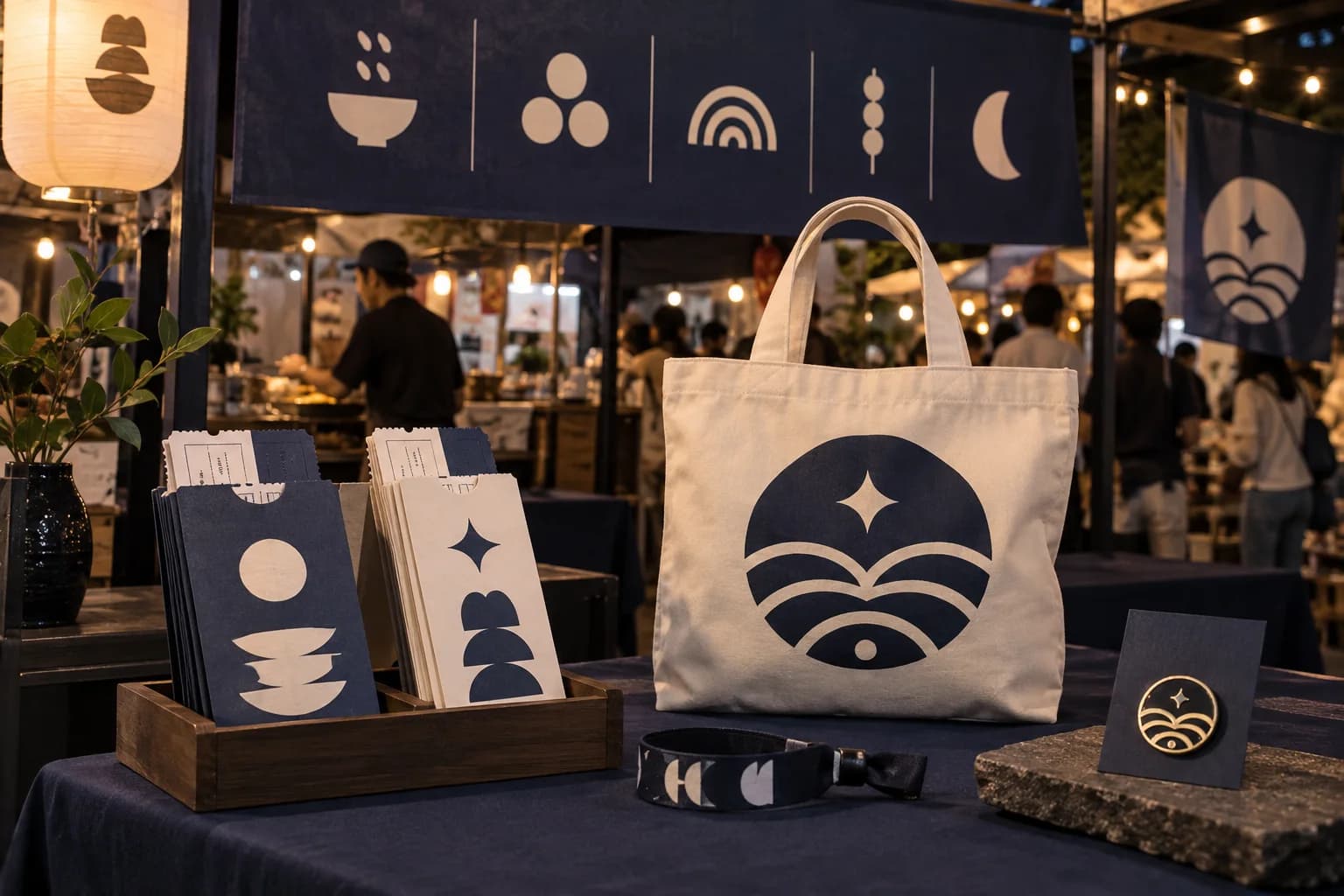
Astronomy kit pieces form a coherent navy-and-silver identity in the planetarium foyer.
The master prompt
Create a horizontal 3:2 brand documentation photograph of [EVENT_IDENTITY] applied to [KIT_COMPONENTS] for [EVENT], staged on [SURFACE] in [SETTING], with [COMPOSITION], [LIGHTING], and [PALETTE]. Show tactile, coherent applications with abstract non-readable marks only; no real logos, text, watermark, or distorted objects.
Visual direction
Style: Tactile brand mockup documentation using fictional, non-readable identity cues.
Lighting: Controlled overhead, daylight, maritime, or lantern light reveals materials and marks.
Composition: Physical kit components are arranged as a believable event identity system.
Variables
- EVENT_IDENTITY — fictional identity direction
- KIT_COMPONENTS — physical applications
- EVENT — event context
- SURFACE — staging surface
- SETTING — documentation setting
- COMPOSITION — kit arrangement
- LIGHTING — material light
- PALETTE — identity colors
How to use it
- Define a fictional event identity and tangible kit components.
- Keep marks abstract until final approved artwork is applied.
- Review trademark and trade-dress concerns.
Same master prompt, different variables
Demo variations
Demo 01
a quiet astronomy symposium identity
- KIT_COMPONENTS
- passes, tote bags, and folded programs
- EVENT
- an observatory gathering
- SURFACE
- dark felt table
- SETTING
- a small planetarium foyer
- COMPOSITION
- three-quarter grouped kit view
- LIGHTING
- soft overhead pools
- PALETTE
- navy, cream, silver
Astronomy kit pieces form a coherent navy-and-silver identity in the planetarium foyer.
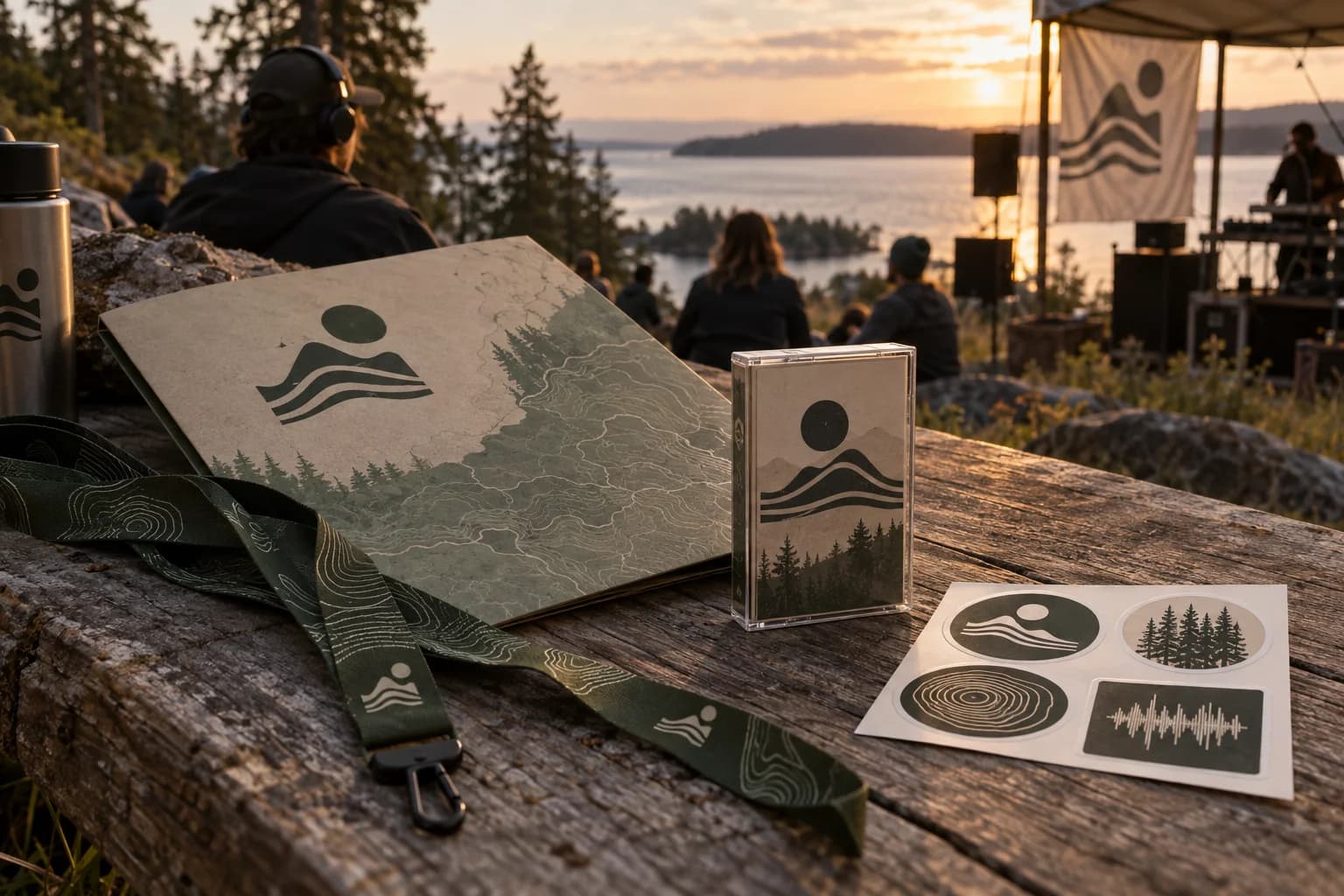
Demo 02
a modern ceramics fair identity
- KIT_COMPONENTS
- clay tags, postcards, and canvas bags
- EVENT
- a studio market
- SURFACE
- unfired clay slab
- SETTING
- an airy workshop
- COMPOSITION
- top-down arranged kit
- LIGHTING
- bright window light
- PALETTE
- terracotta, ivory, ink blue
Clay, canvas, and paper make the ceramics fair kit feel tactile and workshop-specific.
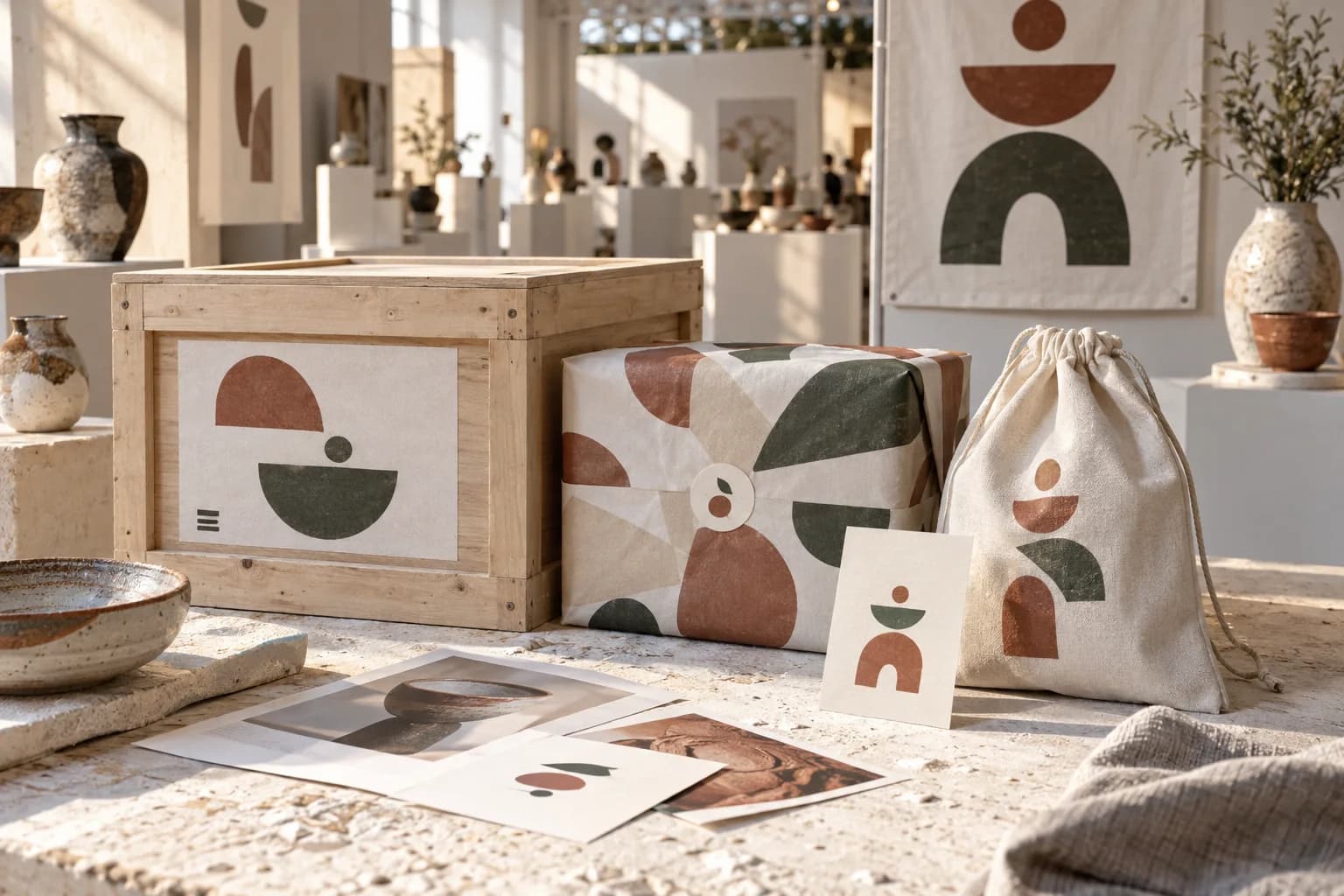
Demo 03
a coastal repair week identity
- KIT_COMPONENTS
- patches, field notebooks, and enamel pins
- EVENT
- a community shoreline event
- SURFACE
- weathered timber
- SETTING
- a harbor workshop
- COMPOSITION
- wide documentary kit scene
- LIGHTING
- cool maritime daylight
- PALETTE
- sea green, orange, charcoal
Repair-week objects sit naturally on weathered timber with an honest harbor mood.
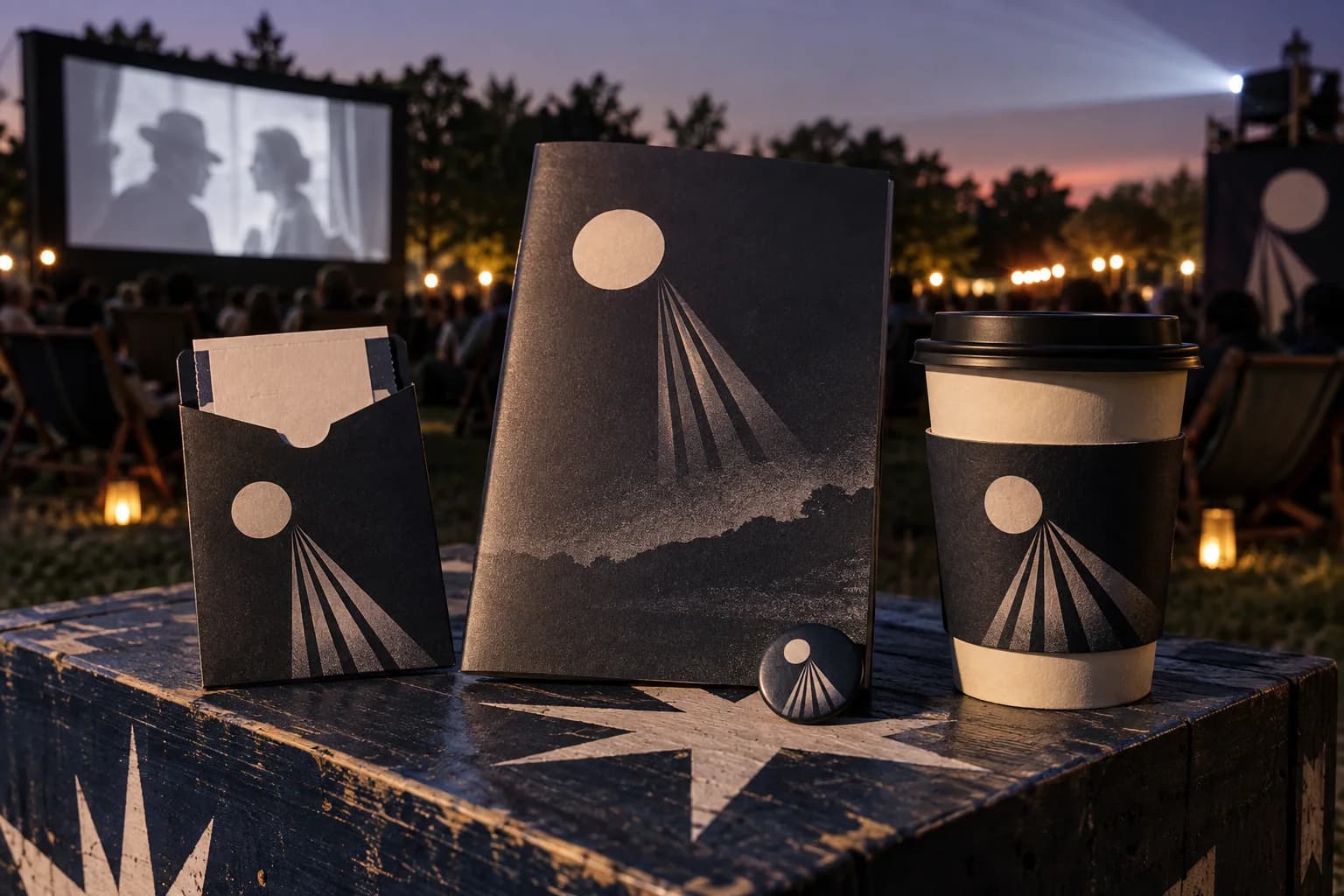
Demo 04
a nocturnal garden festival identity
- KIT_COMPONENTS
- wristbands, seed packets, and lantern sleeves
- EVENT
- an evening garden walk
- SURFACE
- mossy stone
- SETTING
- a lit botanical courtyard
- COMPOSITION
- low atmospheric arrangement
- LIGHTING
- warm lantern glow
- PALETTE
- moss, black, warm yellow
Lantern sleeves and seed packets create a nocturnal garden kit without readable text.
Consistency / testing notes
Kit coherenceCONSISTENT
Each set of physical components reads as one event identity system.
Material realismMOSTLY CONSISTENT
Paper, canvas, clay, metal, and wood remain tactile with expected variation.
Fictional identityCONSISTENT
Marks remain abstract and avoid intentional real logos or readable text.
All four demos use final master prompt version v1-premium-batch-five; only declared variable values changed. Four authentic generations were assessed as one set.
Tips for better results
- Use components that naturally belong to the event.
- Vary paper, fabric, metal, and wood for tactile depth.
- Apply exact identity artwork outside the generated scene.
Limitations
- Generated marks are not final logos or print files.
- Placement and geometry can vary.
- Review rights before commercial application.