

Vintage & Artistic
Handmade Photogram Botanicals
A medium-specific artistic prompt for botanical photograms built from physical process texture rather than generic aging effects.
Featured real result
What this prompt produced
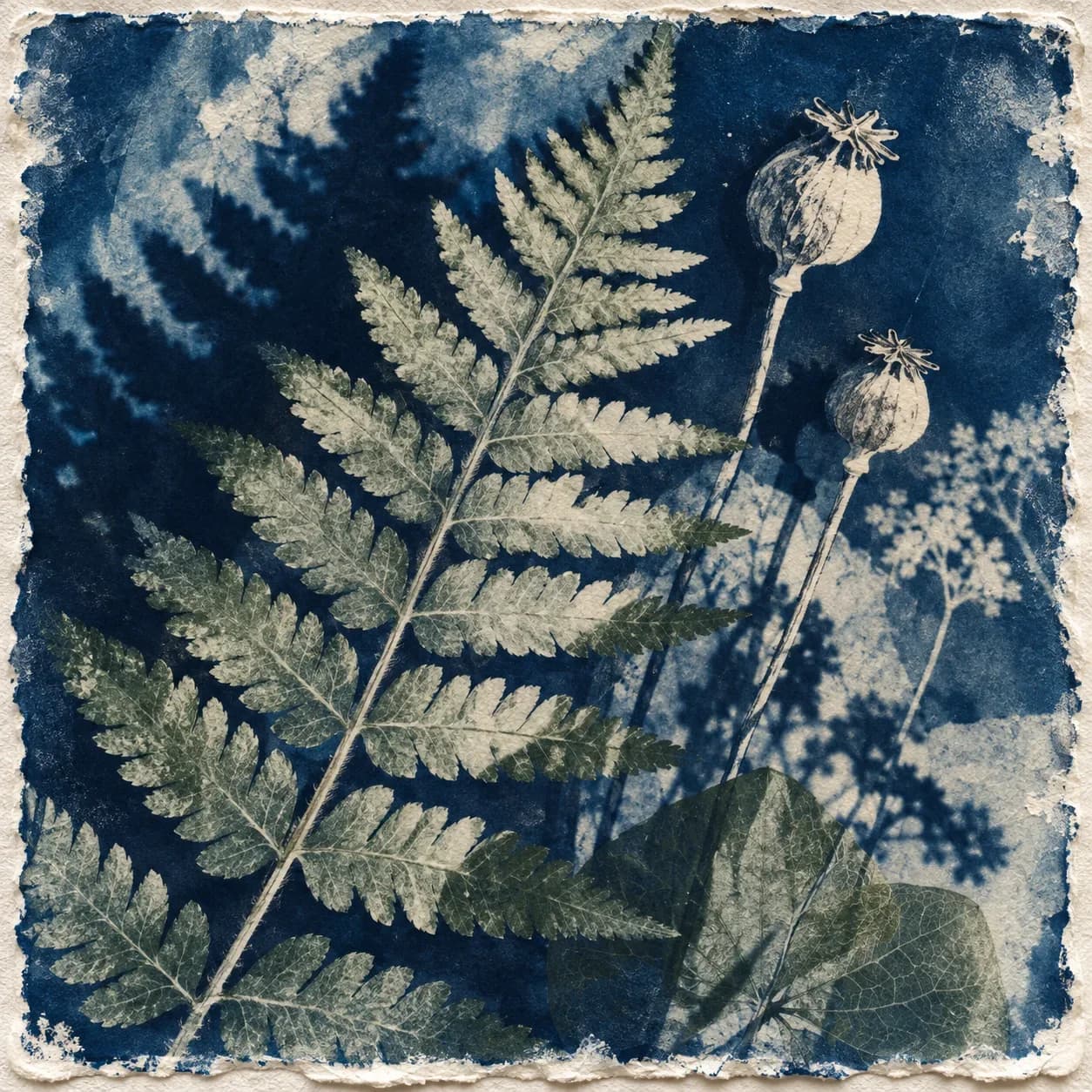
The fern silhouette stays readable while cyanotype and salt texture create process depth.
The master prompt
Create a square 1:1 fine-art photogram of [SUBJECT] made with [MEDIUM] on [PAPER], arranged as [COMPOSITION], with [LIGHTING] and [PALETTE]. Show genuine process texture, material variation, and a readable botanical silhouette; do not use a generic sepia filter. No text, logos, watermark, or muddy clutter.
Visual direction
Style: Medium-specific handmade botanical art with visible physical process behavior.
Lighting: Raking, low, warm, and hard edge light reveal paper grain and process variation.
Composition: Small natural specimens are arranged with enough breathing room to remain legible.
Variables
- SUBJECT — botanical or natural forms
- MEDIUM — specific handmade process
- PAPER — paper surface
- COMPOSITION — specimen arrangement
- LIGHTING — process-revealing light
- PALETTE — material colors
How to use it
- Choose a process that has visible chemistry or contact-print behavior.
- Keep the subject group small and distinct.
- Inspect silhouette edges, paper grain, and accidental marks before use.
Same master prompt, different variables
Demo variations
Demo 01
a fern frond and translucent seed head
- MEDIUM
- layered cyanotype and salt-print texture
- PAPER
- rough cotton paper
- COMPOSITION
- airy vertical botanical arrangement
- LIGHTING
- raking side light
- PALETTE
- Prussian blue, faded ochre, and bone
The fern silhouette stays readable while cyanotype and salt texture create process depth.
Demo 02
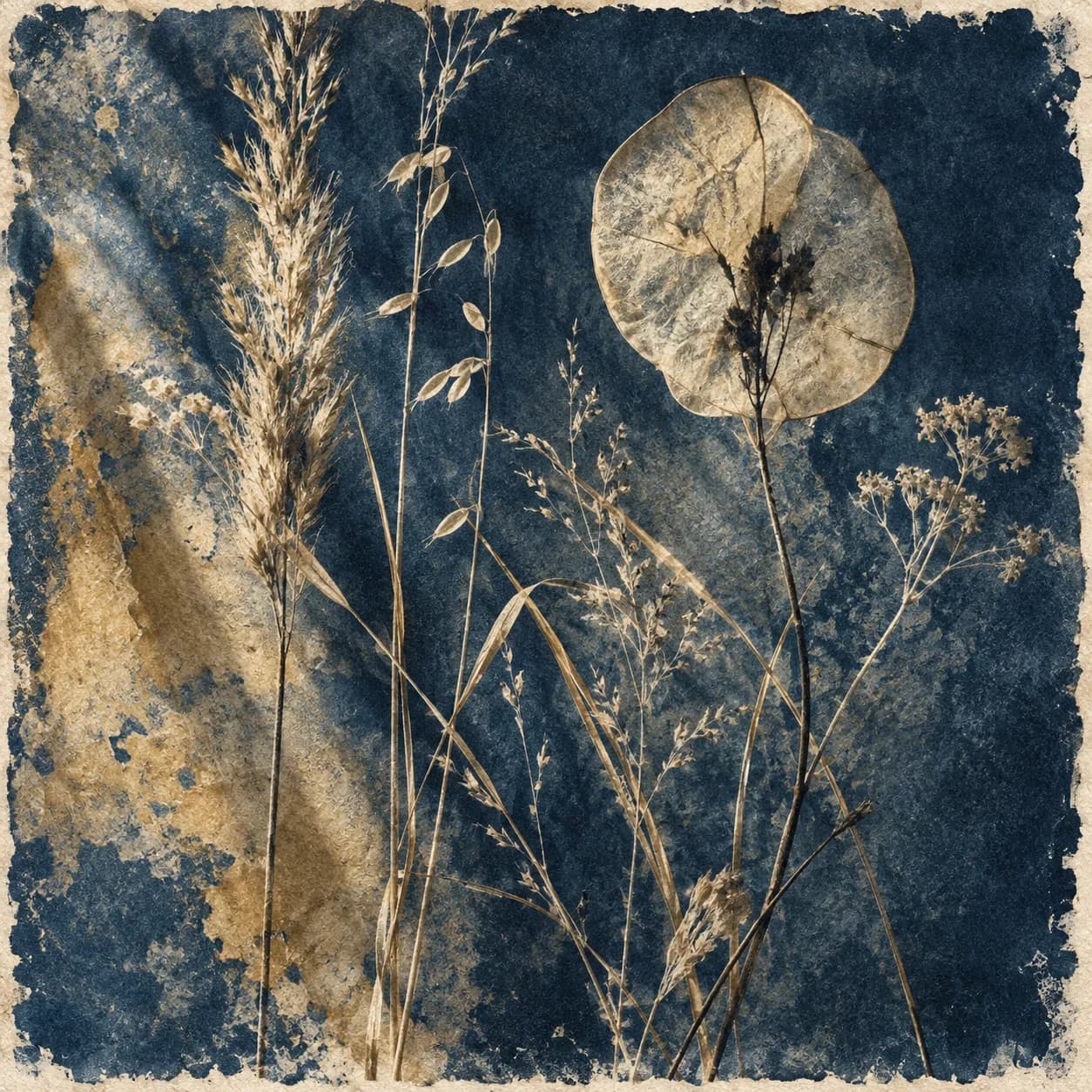
a branch, seed case, and small feather
- MEDIUM
- lumen print and charcoal rubbing
- PAPER
- handmade gray paper
- COMPOSITION
- diagonal specimen composition
- LIGHTING
- low side light
- PALETTE
- graphite, silver, muted rust, and cream
The diagonal branch, seed case, and feather retain distinct edges against the gray paper.
Demo 03
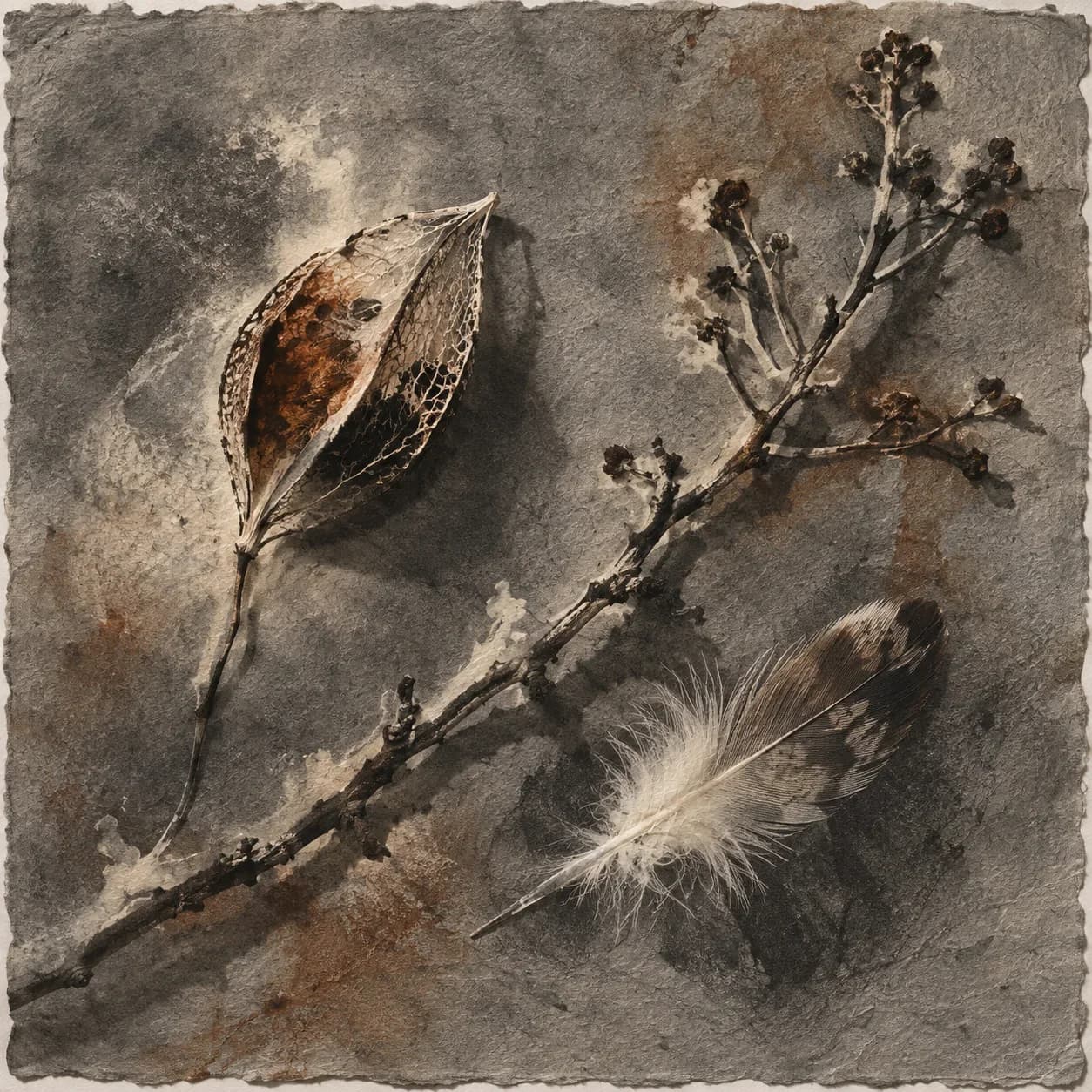
a magnolia leaf and small stones
- MEDIUM
- anthotype with pressed-flower pigment
- PAPER
- handmade cream paper
- COMPOSITION
- sparse horizontal specimen
- LIGHTING
- warm raking light
- PALETTE
- rose, olive, and parchment
Pressed pigment gives the magnolia a quiet rose-and-olive botanical presence.
Demo 04
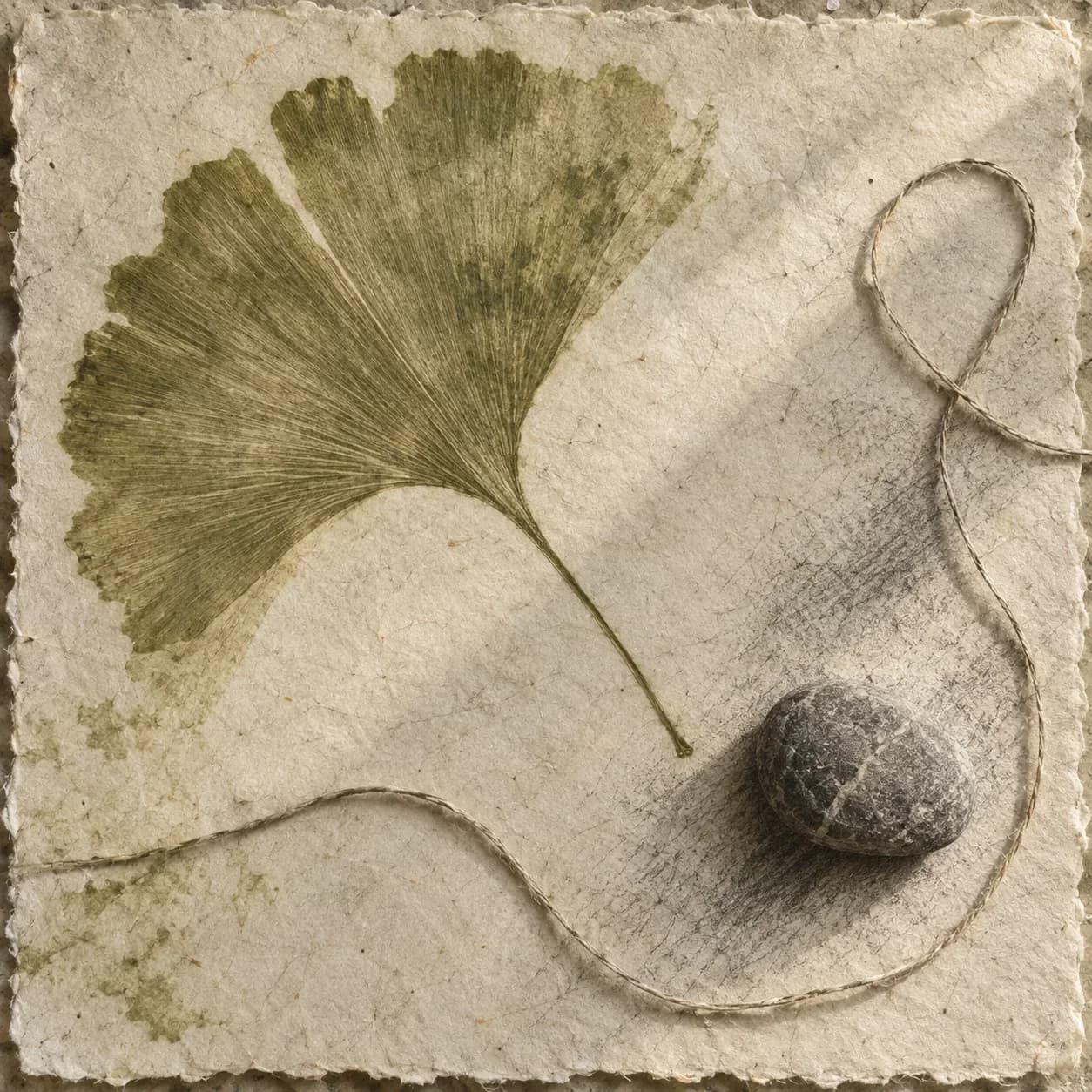
a curled fern, shell fragment, and thread
- MEDIUM
- silver gelatin contact-print texture and pastel pigment
- PAPER
- handmade charcoal paper
- COMPOSITION
- sparse diagonal study
- LIGHTING
- hard window-edge light
- PALETTE
- charcoal, dusty pink, and bone
The charcoal ground makes the fern and shell read as a sparse tactile specimen study.
Consistency / testing notes
Medium specificityCONSISTENT
Each image shows a distinct handmade print language rather than generic sepia treatment.
Botanical readabilityCONSISTENT
Leaves, branches, shells, and seed forms remain identifiable in every composition.
Paper and process textureMOSTLY CONSISTENT
Paper grain and pigment vary by process while retaining a tactile art direction.
All four demos use final master prompt version v1-b7-handmade-photogram-botanicals; only declared variable values changed. Four authentic generations were assessed as one set.
Tips for better results
- Let the paper be part of the image, not just a background.
- Use different natural forms to test edge and texture behavior.
- Add titles and archival labels later in controlled design software.
Limitations
- Generated process texture is an artistic approximation.
- The image does not document a real handmade print or specimen.
- Review natural-history claims and material safety separately.