

Vintage & Artistic
Vintage Visual System Studies
A reusable image-generation prompt for distinctive vintage and artistic visual systems across film, print, poster, and painted treatments.
Featured real result
What this prompt produced
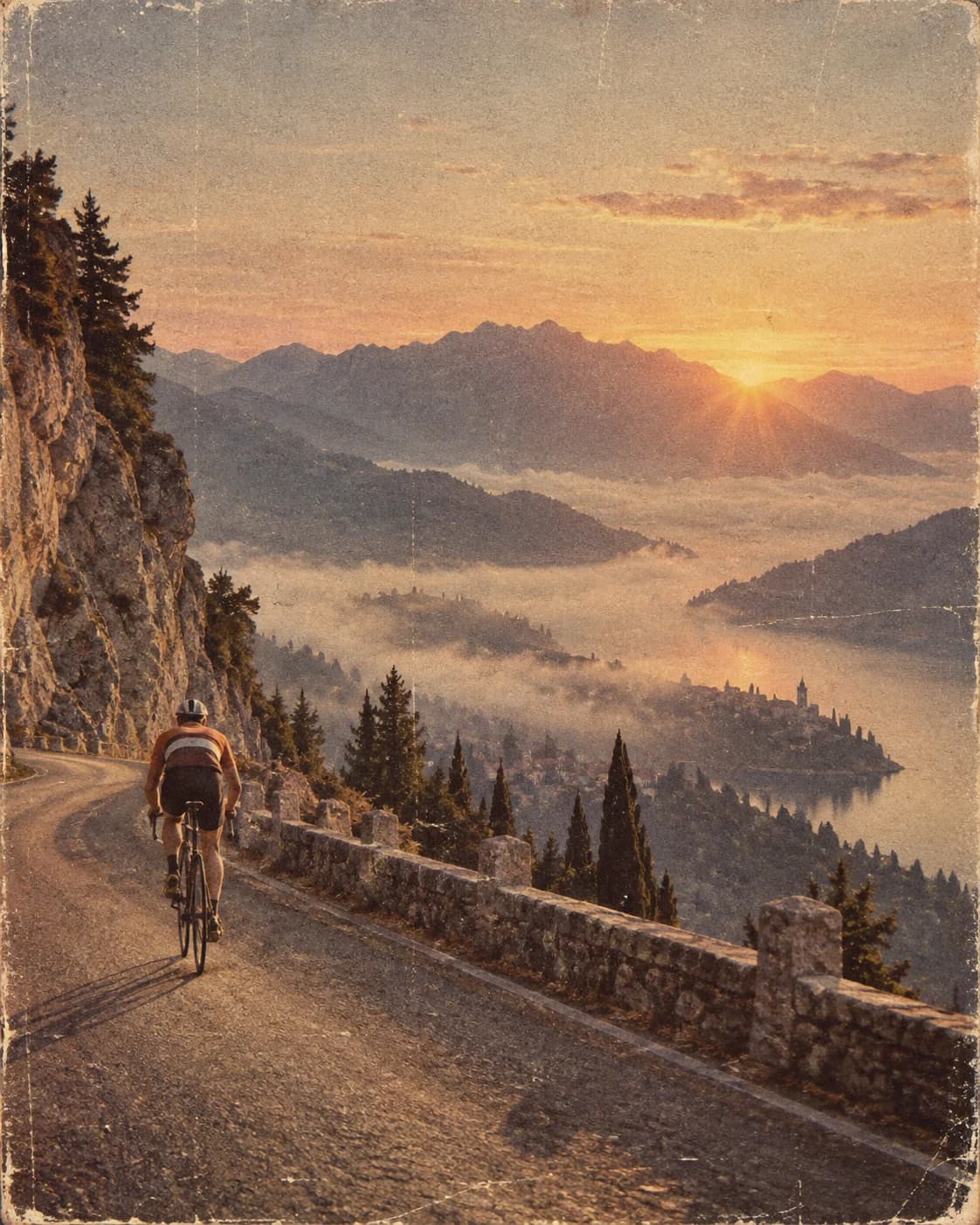
The a lone cyclist keeps the a wide roadside composition while misty sunrise reveals the ochre, teal, cream treatment.
The master prompt
Create a distinctive artistic image of [SUBJECT] interpreted through [SETTING]. Use tactile medium texture, [COMPOSITION], [LIGHTING], and [PALETTE] to create a cohesive vintage visual system. Preserve recognizable subject structure while avoiding modern logos, readable text, watermarks, and clutter.
Visual direction
Style: Distinctive vintage and artistic direction with tactile print, film, gouache, or poster texture.
Lighting: Lighting is interpreted through the selected period-inspired visual treatment rather than forced photography language.
Composition: Readable subject silhouettes and deliberate compositions suited to a vintage visual system.
Variables
- SUBJECT — central visual subject
- SETTING — era and environment
- COMPOSITION — subject arrangement
- LIGHTING — atmosphere or light source
- PALETTE — period-inspired colors
How to use it
- Choose a subject and era influence that support one visual language.
- Keep the style direction stable while changing the scene.
- Review resemblance to protected artwork or living artists before use.
Same master prompt, different variables
Demo variations
Demo 01
a lone cyclist
- SETTING
- 1970s travel editorial on a mountain road at dawn
- COMPOSITION
- a wide roadside composition
- LIGHTING
- misty sunrise
- PALETTE
- ochre, teal, cream
The a lone cyclist keeps the a wide roadside composition while misty sunrise reveals the ochre, teal, cream treatment.
Demo 02
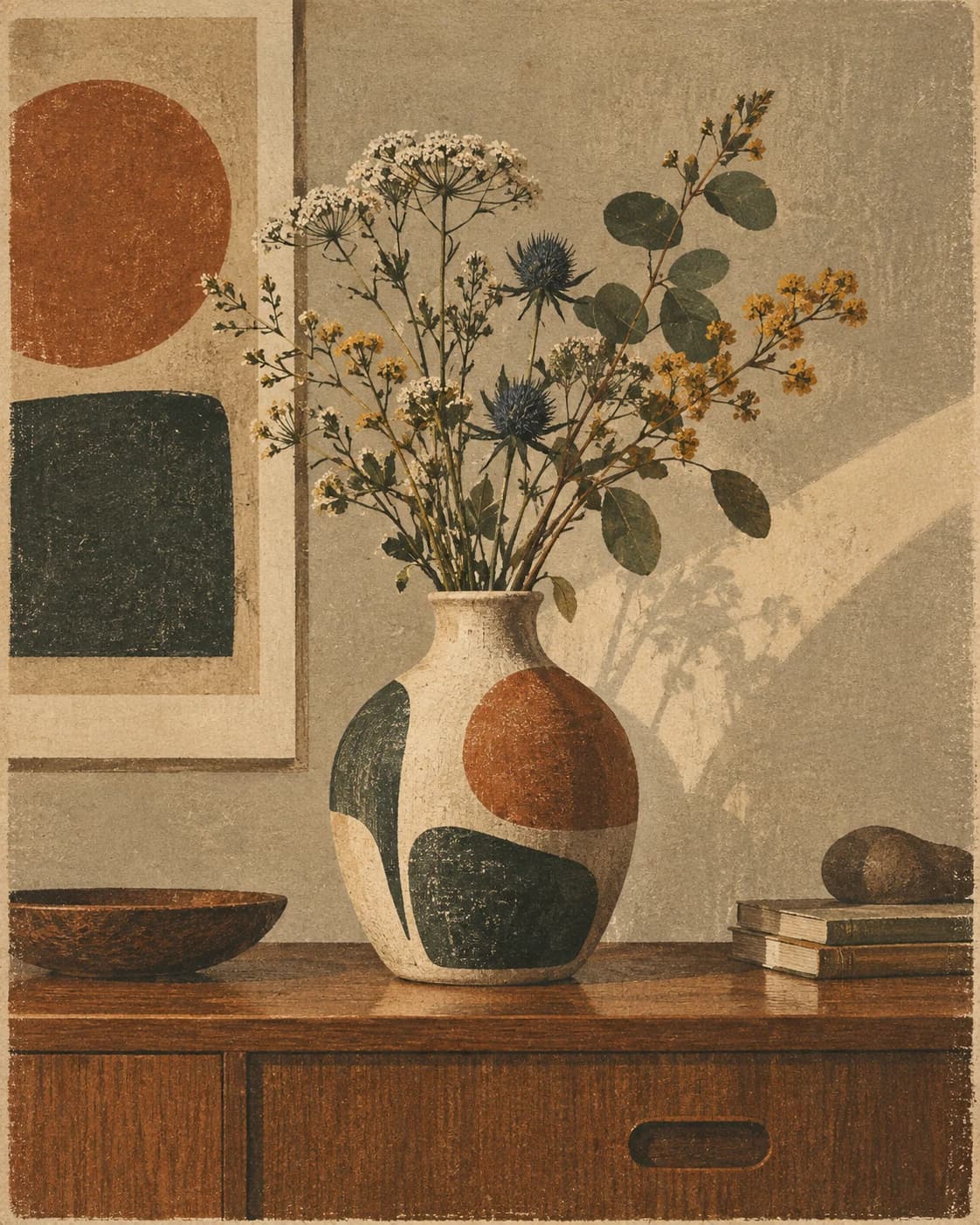
a ceramic vase with wild stems
- SETTING
- a mid-century still life on a wooden sideboard
- COMPOSITION
- a centered still life
- LIGHTING
- soft studio shadow
- PALETTE
- mustard, olive, burnt orange
The a ceramic vase with wild stems keeps the a centered still life while soft studio shadow reveals the mustard, olive, burnt orange treatment.
Demo 03
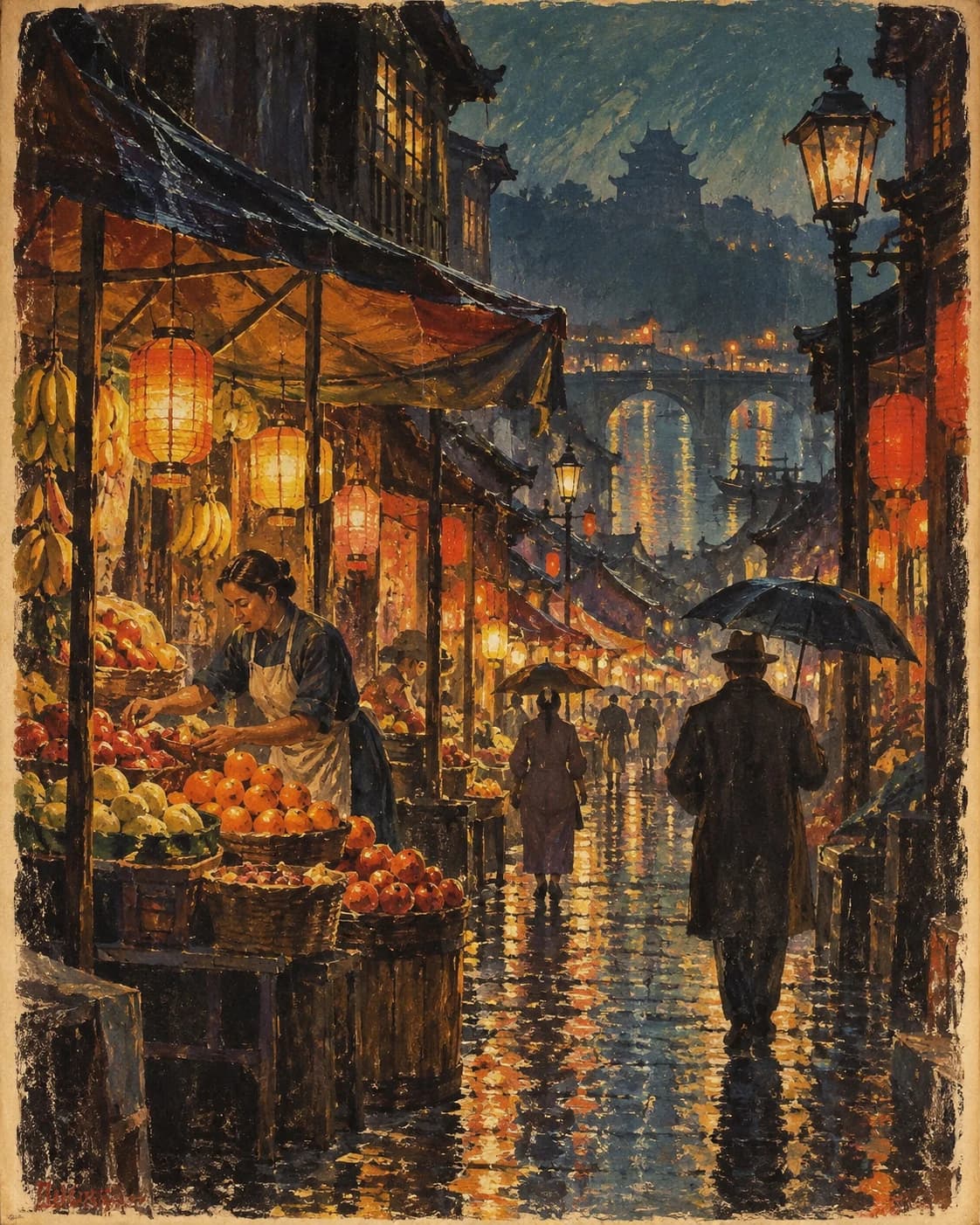
a night market fruit stall
- SETTING
- a 1930s travel-poster old-town lane
- COMPOSITION
- a layered street perspective
- LIGHTING
- glowing practical lights
- PALETTE
- red, navy, warm yellow
The a night market fruit stall keeps the a layered street perspective while glowing practical lights reveals the red, navy, warm yellow treatment.
Demo 04
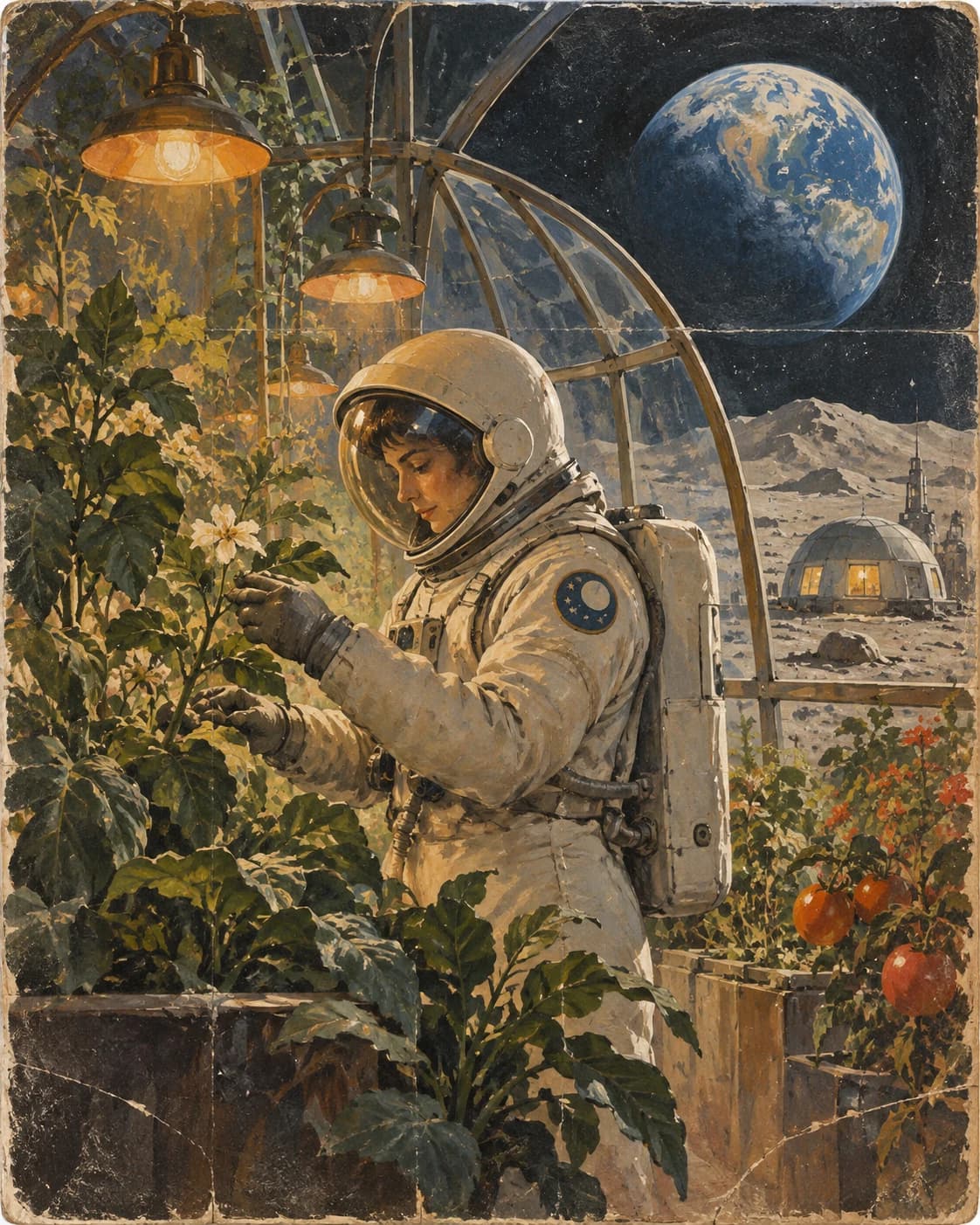
an astronaut botanist
- SETTING
- a retro-futurist greenhouse on a moon
- COMPOSITION
- a hero figure among plants
- LIGHTING
- cool moonlight and warm lamps
- PALETTE
- indigo, jade, cream
The an astronaut botanist keeps the a hero figure among plants while cool moonlight and warm lamps reveals the indigo, jade, cream treatment.
Consistency / testing notes
Distinctive artistic treatmentCONSISTENT
All four outputs use a clearly directed vintage or tactile artistic treatment.
Subject readabilityMOSTLY CONSISTENT
Subjects remain recognizable while the astronaut and market scenes introduce more visual complexity.
Period textureMOSTLY CONSISTENT
Grain, paper, and painted texture vary by scene but remain within the intended visual family.
All four demos use final master prompt version v1-vintage-visual-system; only declared variable values changed. Four authentic generations were assessed as one set.
Tips for better results
- Use material texture as part of the visual system, not as random noise.
- Keep silhouettes clear so the result remains legible at small sizes.
- Use exact typography only in a later controlled design pass.
Limitations
- Style references may resemble existing works or artists too closely.
- Fine texture, era details, and lettering may be inaccurate.
- Review intellectual-property and attribution concerns before publication.