

Product Photography
Material Cross-Section Product Stories
A commercial product prompt for material-aware construction studies that make form, layers, and physical making legible.
Featured real result
What this prompt produced
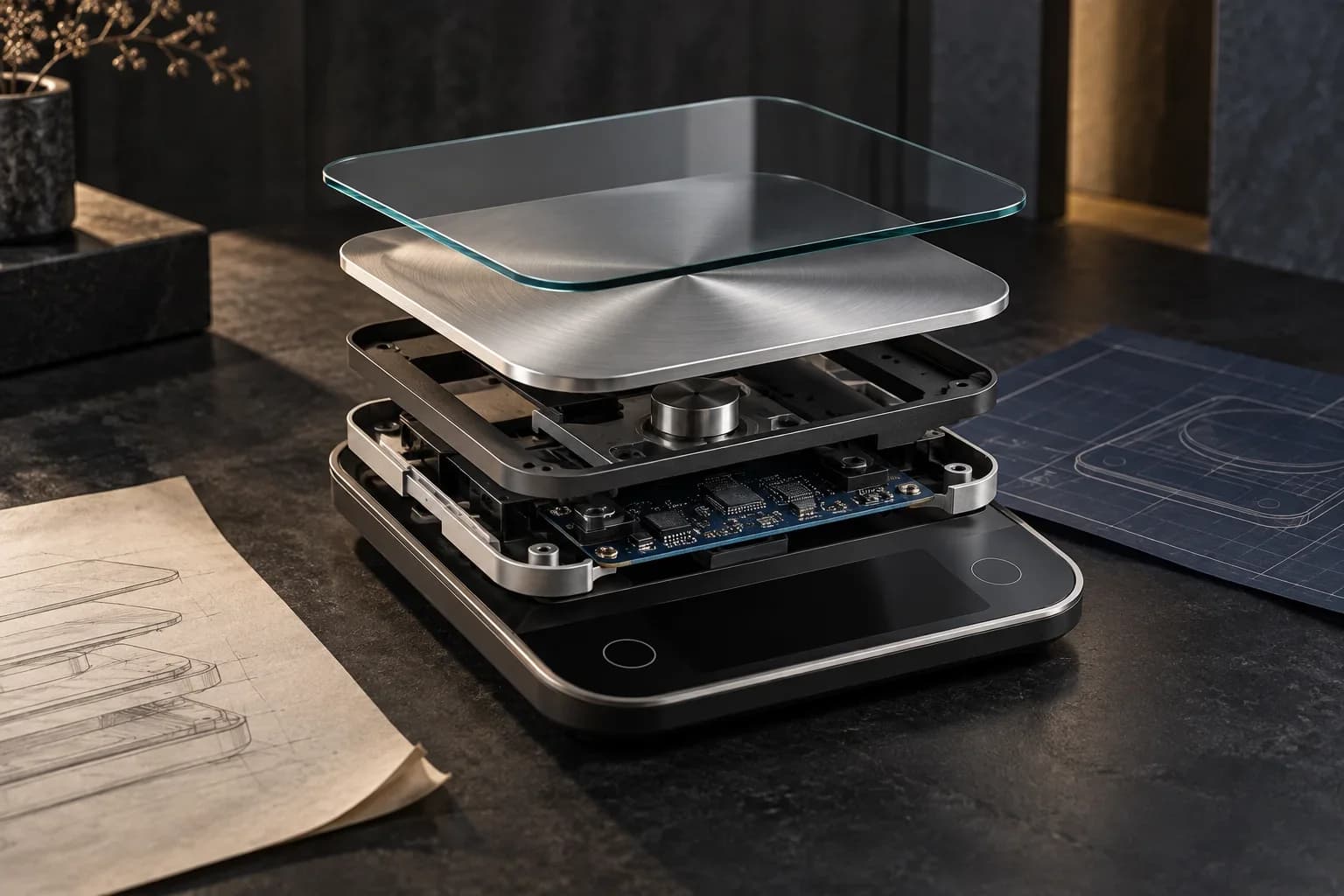
The coffee maker keeps its assembled silhouette clear while the material layers explain how it is made.
The master prompt
Create a premium horizontal 3:2 product photograph of [PRODUCT] with [CONSTRUCTION_STORY] arranged on [SURFACE] in [SETTING], framed as [COMPOSITION], with [LIGHTING] and [PALETTE]. Keep one original unbranded product as the hero while showing believable material relationships and a restrained construction-study logic. No readable text, logos, watermark, people, duplicates, floating parts, or warped geometry.
Visual direction
Style: High-end editorial product photography with tactile construction-study direction.
Lighting: Controlled studio, daylight, and warm practical light reveal material edges without harsh clutter.
Composition: One assembled hero product remains dominant while a restrained material study adds context.
Variables
- PRODUCT — unbranded hero product
- CONSTRUCTION_STORY — material or construction study
- SURFACE — display surface
- SETTING — commercial context
- COMPOSITION — camera view
- LIGHTING — controlled product light
- PALETTE — coordinated colors
How to use it
- Choose one simple product and a physically plausible construction story.
- Keep the hero assembled and make secondary layers subordinate.
- Inspect geometry, reflections, and accidental technical text before use.
Same master prompt, different variables
Demo variations
Demo 01
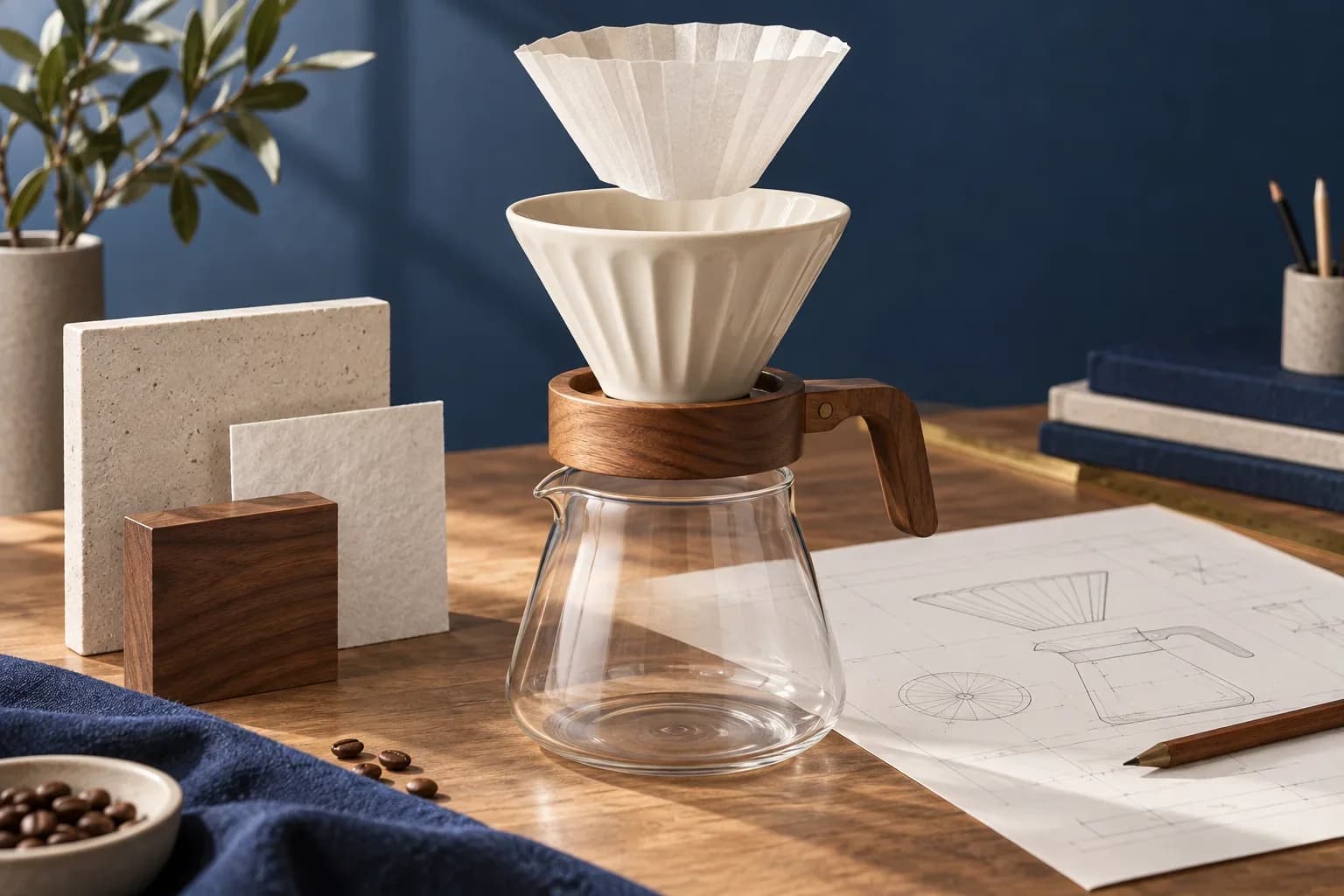
an unbranded ceramic pour-over coffee maker
- CONSTRUCTION_STORY
- ceramic body, paper filter, and wood handle arranged as a tasteful material study
- SURFACE
- a pale drafting table
- SETTING
- a bright design studio
- COMPOSITION
- elevated three-quarter view with the hero assembled in front
- LIGHTING
- bright controlled studio light with crisp edge highlights
- PALETTE
- ivory, walnut, and muted indigo
The coffee maker keeps its assembled silhouette clear while the material layers explain how it is made.
Demo 02
an unbranded wireless speaker
- CONSTRUCTION_STORY
- fabric grille, wood shell, and metal controls shown in a precise layered arrangement
- SURFACE
- a dark workshop bench
- SETTING
- a quiet listening room
- COMPOSITION
- side perspective with the intact speaker dominant
- LIGHTING
- soft directional daylight and grounded shadow
- PALETTE
- graphite, birch, and cobalt
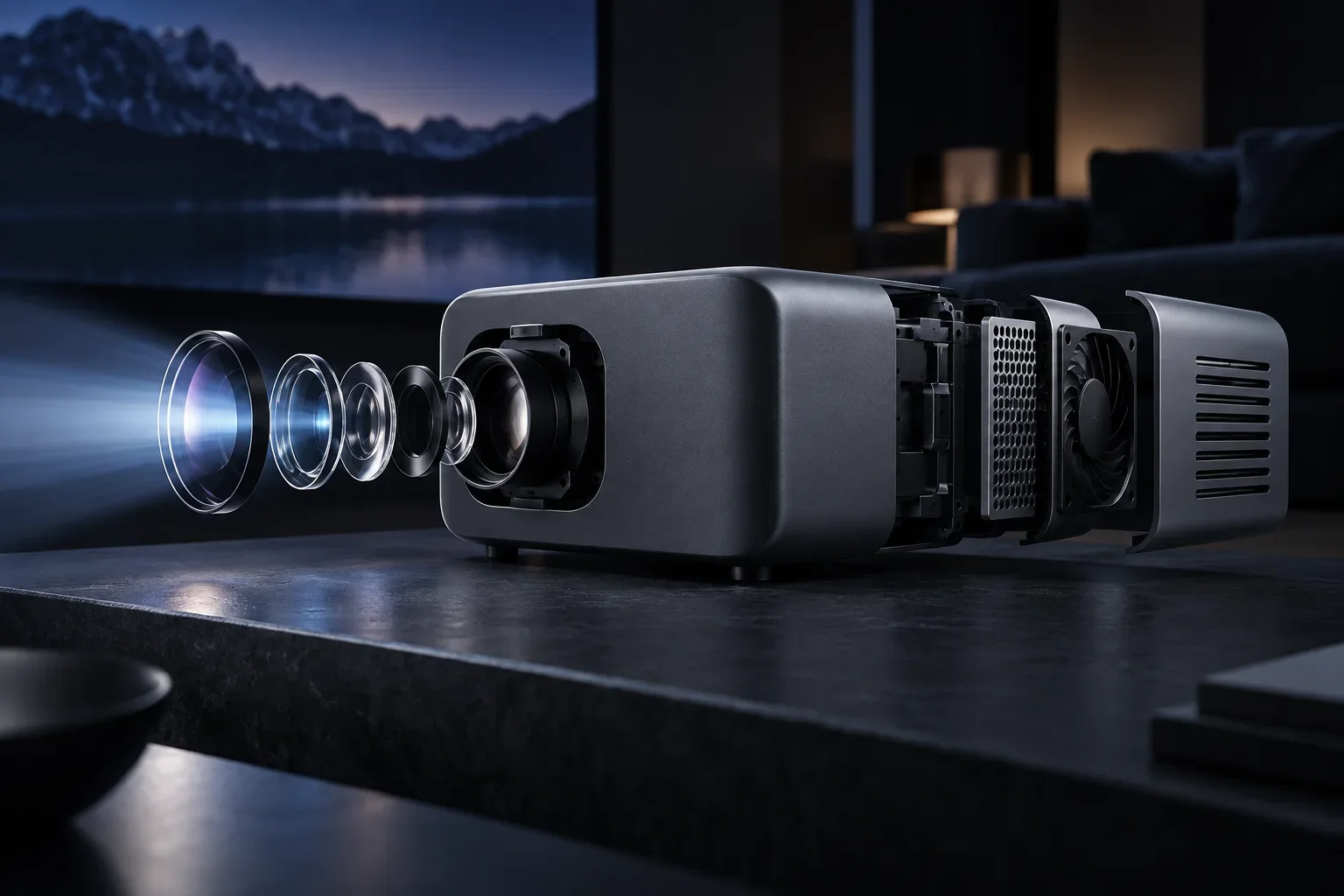
The speaker grille, shell, and controls remain distinct without turning the frame into a technical diagram.
Demo 03
an unbranded reusable water bottle
- CONSTRUCTION_STORY
- steel body, silicone seal, and translucent cap shown as a clean cutaway-inspired study
- SURFACE
- a cool industrial bench
- SETTING
- a minimal materials lab
- COMPOSITION
- high three-quarter view with clear vertical silhouette
- LIGHTING
- crisp overhead studio illumination
- PALETTE
- steel, cobalt, and white
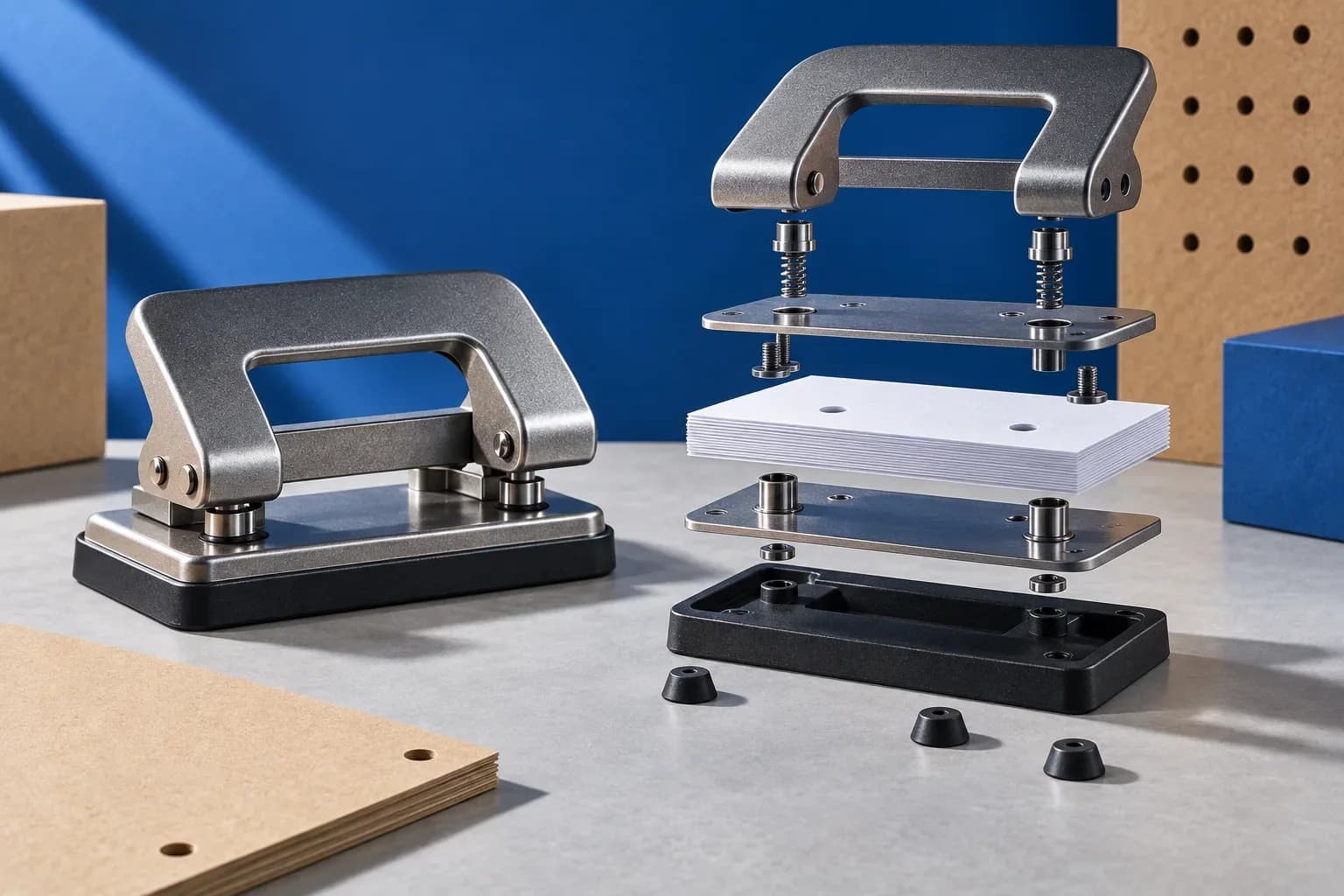
Steel, silicone, and translucent plastic read as separate materials around one usable product form.
Demo 04
an unbranded desk lamp
- CONSTRUCTION_STORY
- ceramic shade, brass arm, and fabric cord arranged with measured construction spacing
- SURFACE
- a walnut side table
- SETTING
- a quiet reading corner
- COMPOSITION
- low side view with the assembled lamp as focal point
- LIGHTING
- warm evening pool light with restrained reflections
- PALETTE
- ivory, brass, and indigo
The lamp stays grounded on the table and the construction arrangement supports rather than competes with it.
Consistency / testing notes
Product hierarchyCONSISTENT
Each frame maintains one assembled unbranded product as the clear hero.
Material distinctionCONSISTENT
Ceramic, wood, metal, glass, fabric, and silicone are presented as visibly different materials.
Construction-study restraintMOSTLY CONSISTENT
Secondary layers remain controlled, with the lamp and bottle using slightly different spacing.
All four demos use final master prompt version v1-b7-material-cross-section-product-stories; only declared variable values changed. Four authentic generations were assessed as one set.
Tips for better results
- Use materials that can be visually distinguished at a glance.
- Keep construction spacing measured rather than explosive.
- Add verified specifications outside the generated image.
Limitations
- Generated cutaway-like arrangements are not engineering diagrams.
- Small components and exact dimensions may vary.
- Review product safety, specifications, and commercial accuracy separately.