

Product Photography
Product Shadow Material Studies
A product prompt for graphic shadow studies that reveal material finish, silhouette, and commercial form.
Featured real result
What this prompt produced
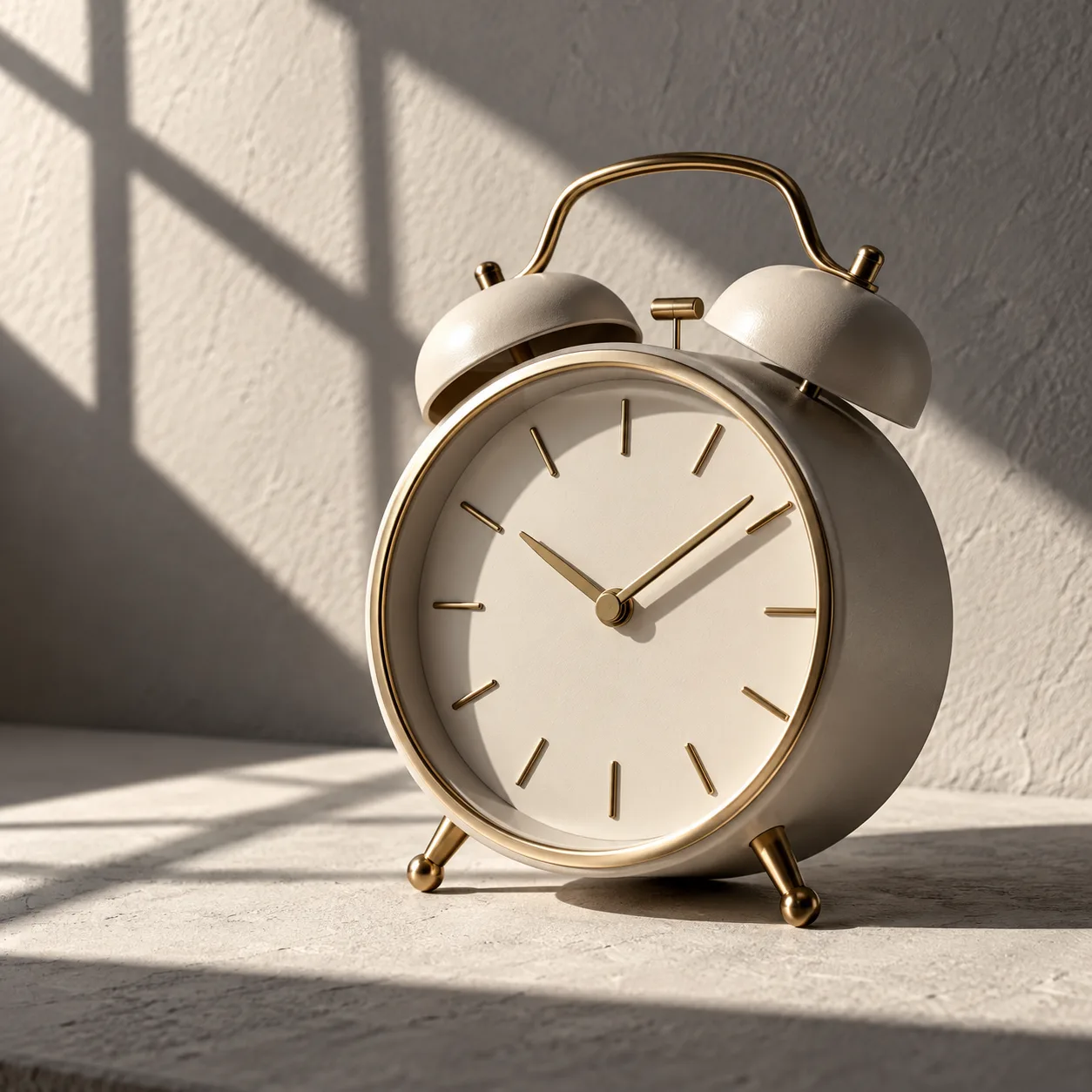
The alarm clock silhouette stays dominant beneath a crisp diagonal grid shadow.
The master prompt
Create a square 1:1 premium product photograph of [PRODUCT] shaped by [SHADOW_PATTERN] on [SURFACE] in [SETTING], framed as [COMPOSITION], with [LIGHTING] and [PALETTE]. Make the product geometry and material finish the clear hero, with elegant graphic shadows and no branding. Avoid readable text, logos, watermark, hands, people, duplicates, and warped forms.
Visual direction
Style: Premium graphic product photography with controlled shadows and tactile material detail.
Lighting: Hard or directional light creates deliberate shadow shapes without hiding the product.
Composition: One unbranded product is isolated as a hero while the shadow supplies visual structure.
Variables
- PRODUCT — hero product
- SHADOW_PATTERN — graphic shadow shape
- SURFACE — display surface
- SETTING — studio context
- COMPOSITION — camera view
- LIGHTING — shadow-making light
- PALETTE — coordinated colors
How to use it
- Replace the seven variables with one product and shadow idea.
- Keep the product geometry simpler than the shadow pattern.
- Inspect reflections, silhouette, and brand avoidance.
Same master prompt, different variables
Demo variations
Demo 01
an unbranded analog alarm clock
- SHADOW_PATTERN
- a diagonal window-grid shadow
- SURFACE
- matte plaster
- SETTING
- quiet studio
- COMPOSITION
- front three-quarter hero
- LIGHTING
- hard morning light
- PALETTE
- cream, graphite, indigo
The alarm clock silhouette stays dominant beneath a crisp diagonal grid shadow.
Demo 02
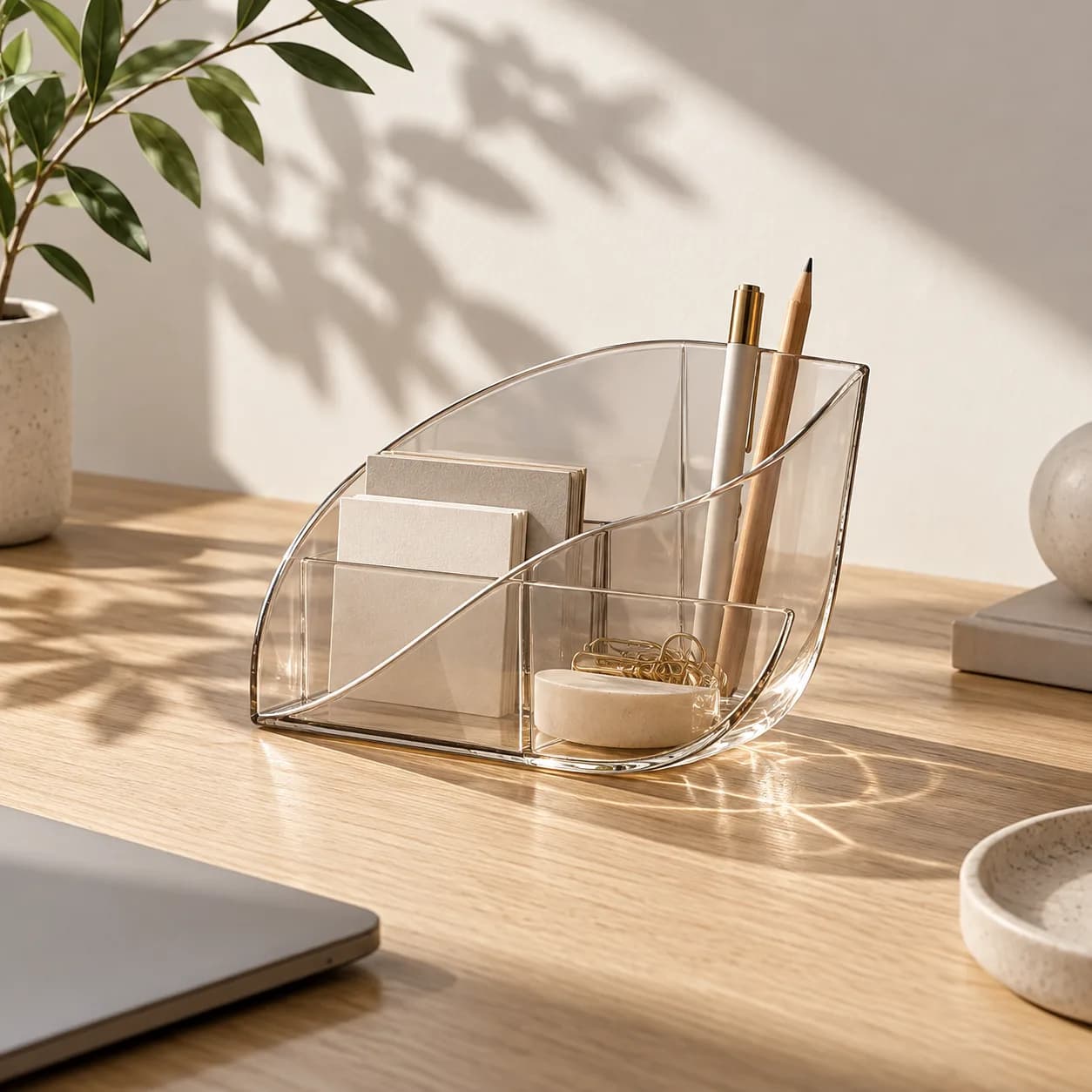
a translucent desk organizer
- SHADOW_PATTERN
- a curved leaf shadow
- SURFACE
- pale oak
- SETTING
- minimal workspace
- COMPOSITION
- centered still life
- LIGHTING
- sharp afternoon light
- PALETTE
- clear, honey, blue
The organizer remains translucent and legible while the leaf shadow adds a graphic layer.
Demo 03
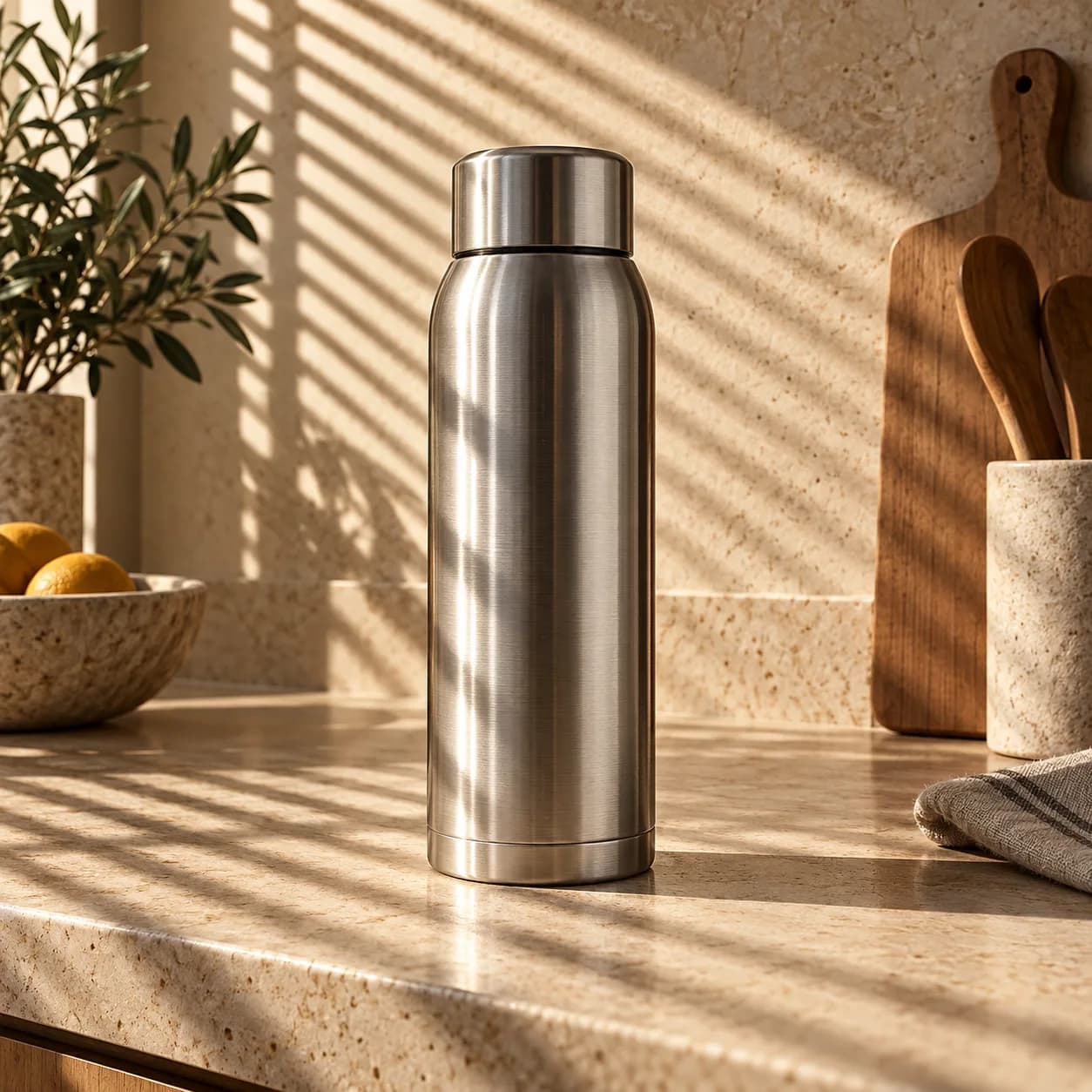
a brushed steel thermos
- SHADOW_PATTERN
- parallel blind shadows
- SURFACE
- warm limestone
- SETTING
- calm kitchen
- COMPOSITION
- low three-quarter view
- LIGHTING
- strong side light
- PALETTE
- steel, sand, charcoal
Parallel shadows reveal the thermos cylinder and brushed finish without clutter.
Demo 04
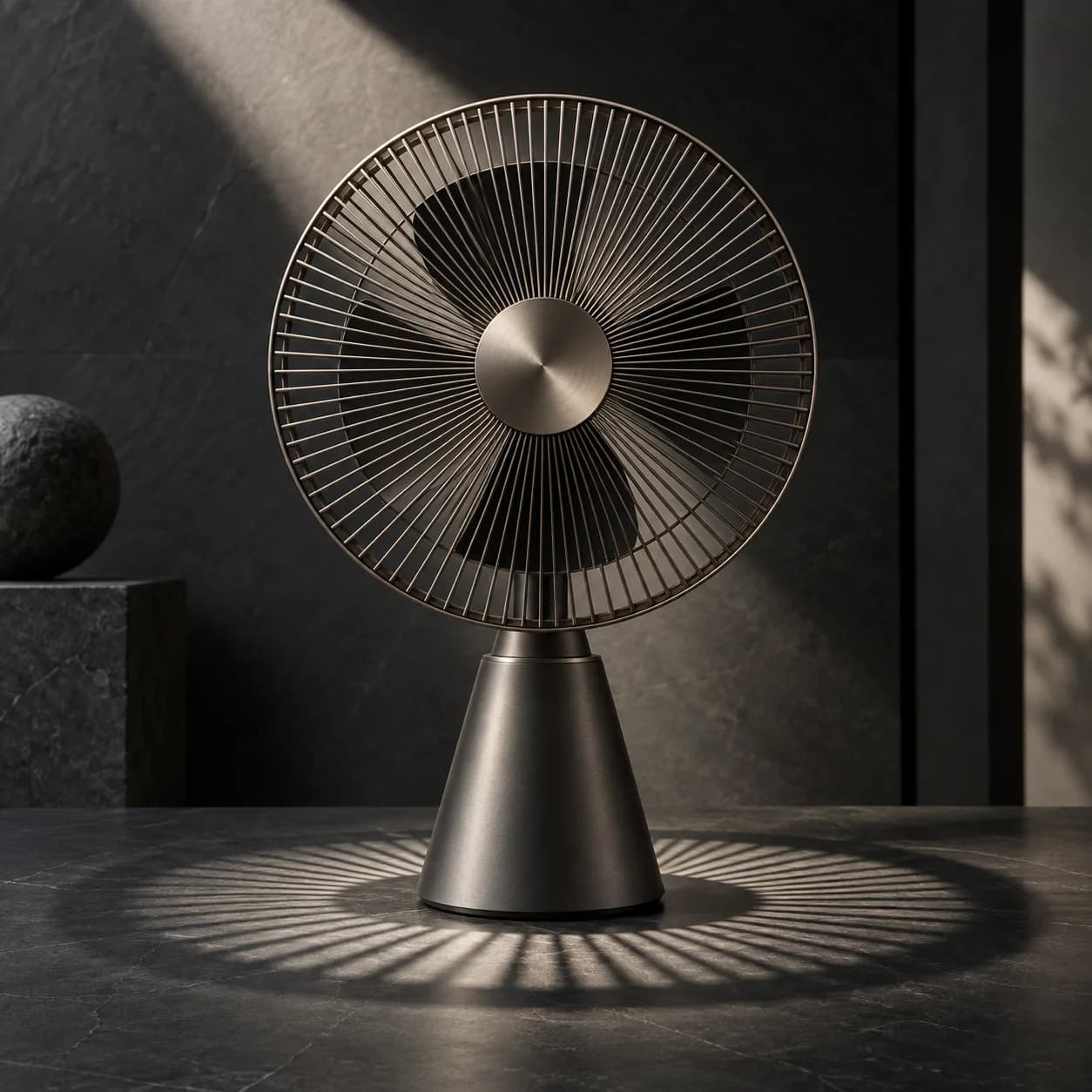
a sculptural table fan
- SHADOW_PATTERN
- a circular lattice shadow
- SURFACE
- dark slate
- SETTING
- architectural studio
- COMPOSITION
- symmetrical frontal view
- LIGHTING
- focused spotlight
- PALETTE
- black, ivory, muted indigo
The fan and lattice shadow create a balanced frontal study with clear geometry.
Consistency / testing notes
Product focusCONSISTENT
Each frame keeps one clear unbranded product as the visual hero.
Shadow structureCONSISTENT
Distinct shadow patterns remain visible without replacing the product subject.
Material detailMOSTLY CONSISTENT
Glass, metal, plaster, and plastic respond differently but remain recognizable.
All four demos use final master prompt version v1; only declared variable values changed. Four authentic generations were assessed as one set.
Tips for better results
- Use shadow patterns that echo the product's form.
- Keep the surface quiet for a catalog-ready result.
- Add exact product copy later outside the generated image.
Limitations
- Shadow edges and reflection strength can vary.
- Exact product measurements are not guaranteed.
- Review commercial geometry before use.